
Last updated September 10, 2026
Full 25-point door and opener safety check with every visit - springs, cables, rollers, tracks, and your LiftMaster or Chamberlain opener included
You get a price before we start. It does not change when the truck arrives.
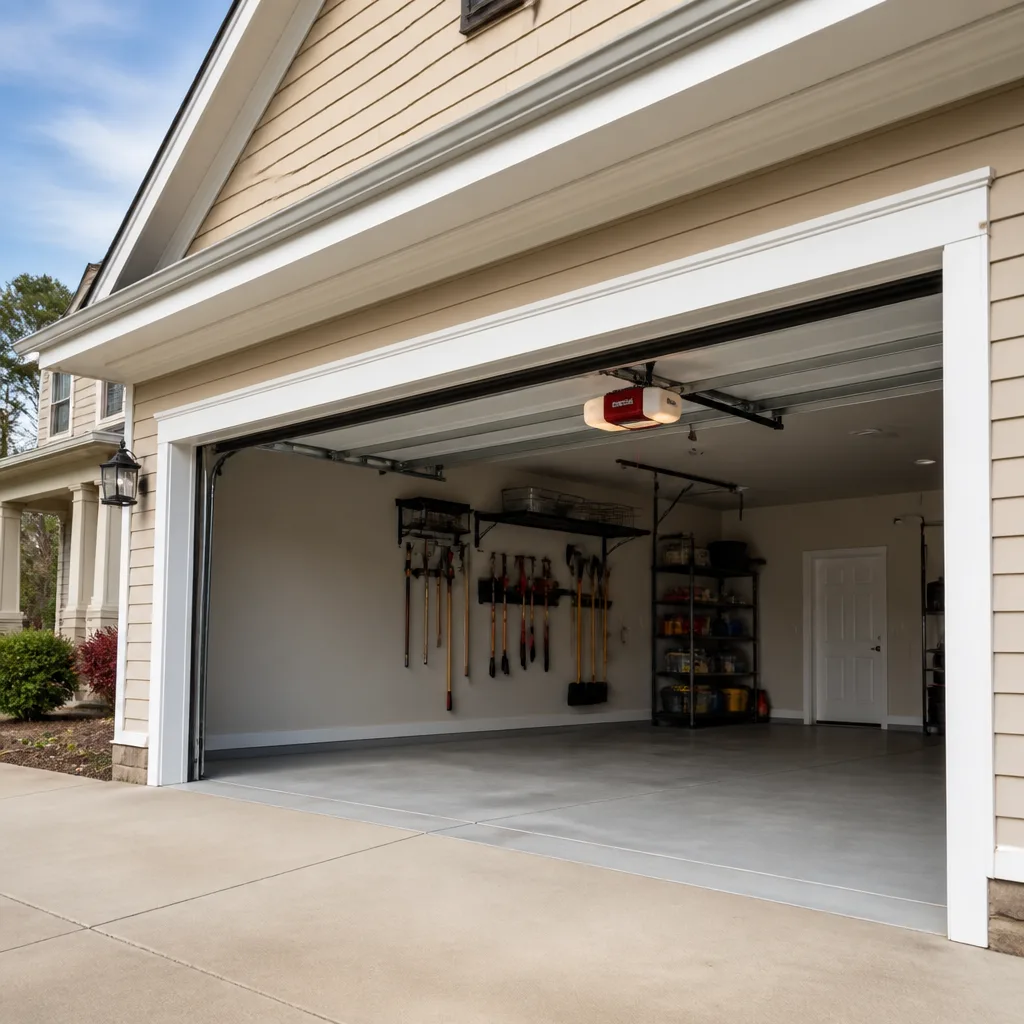
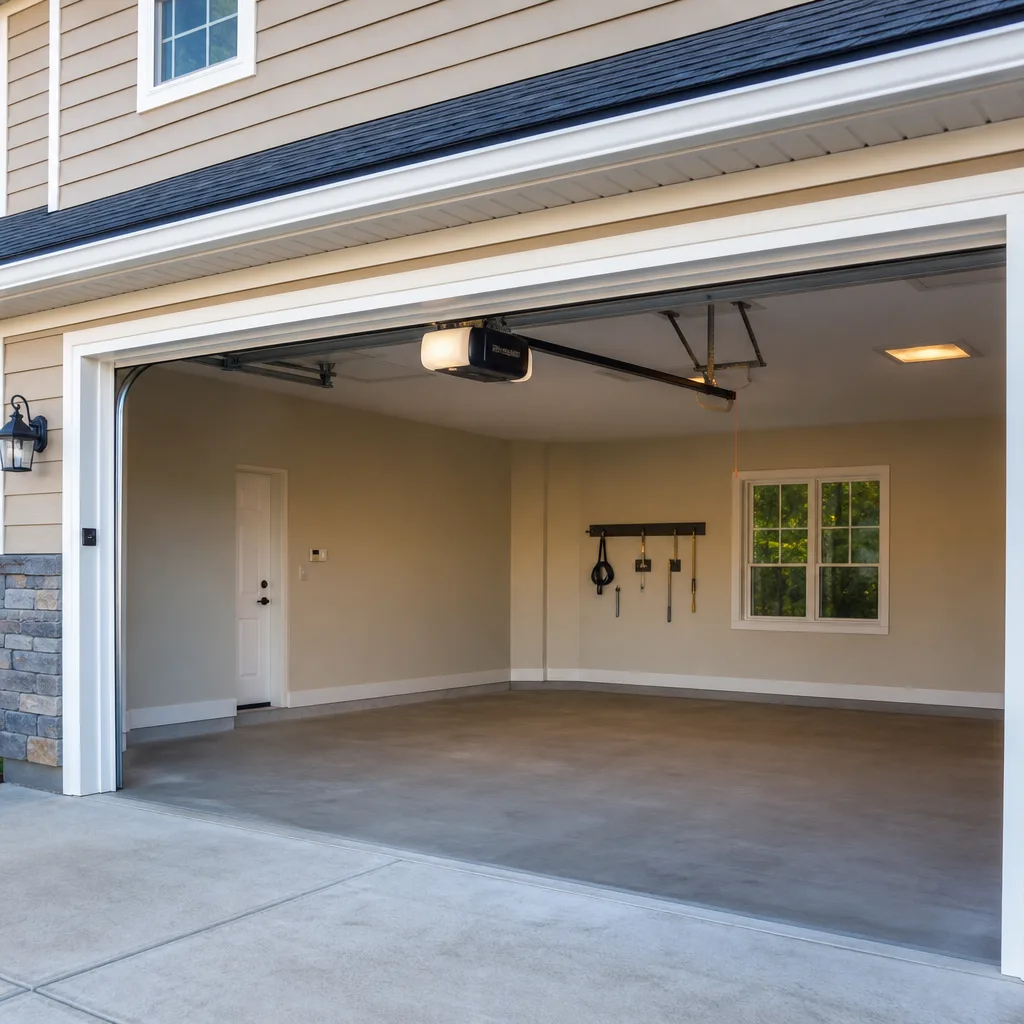
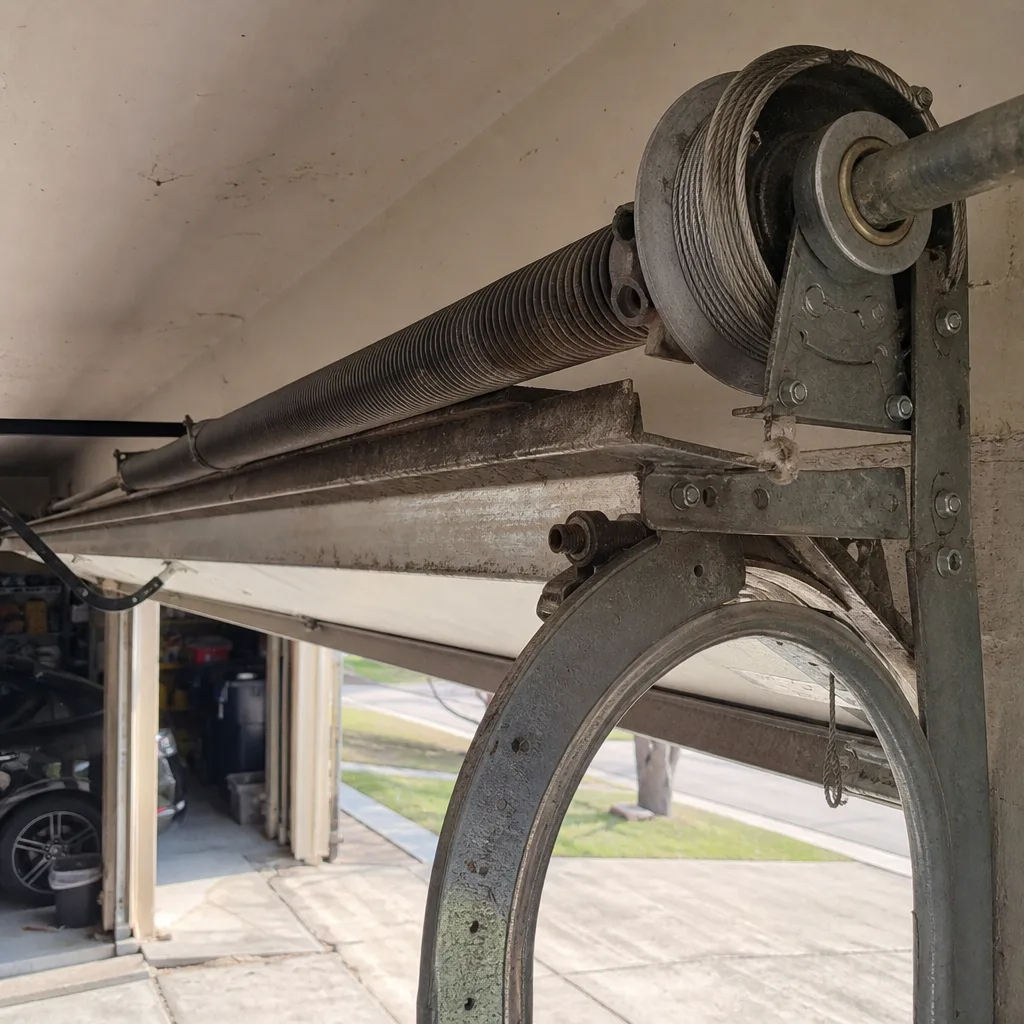 Before
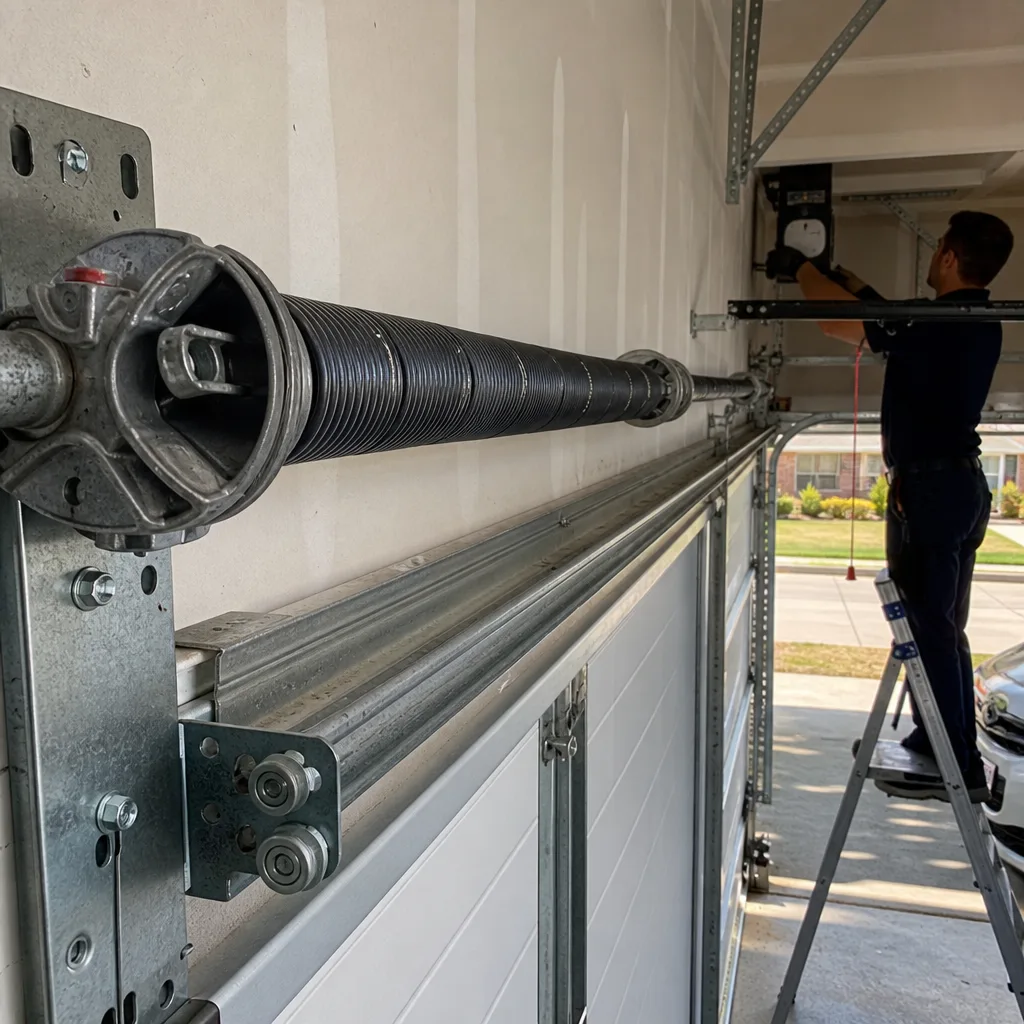 After
After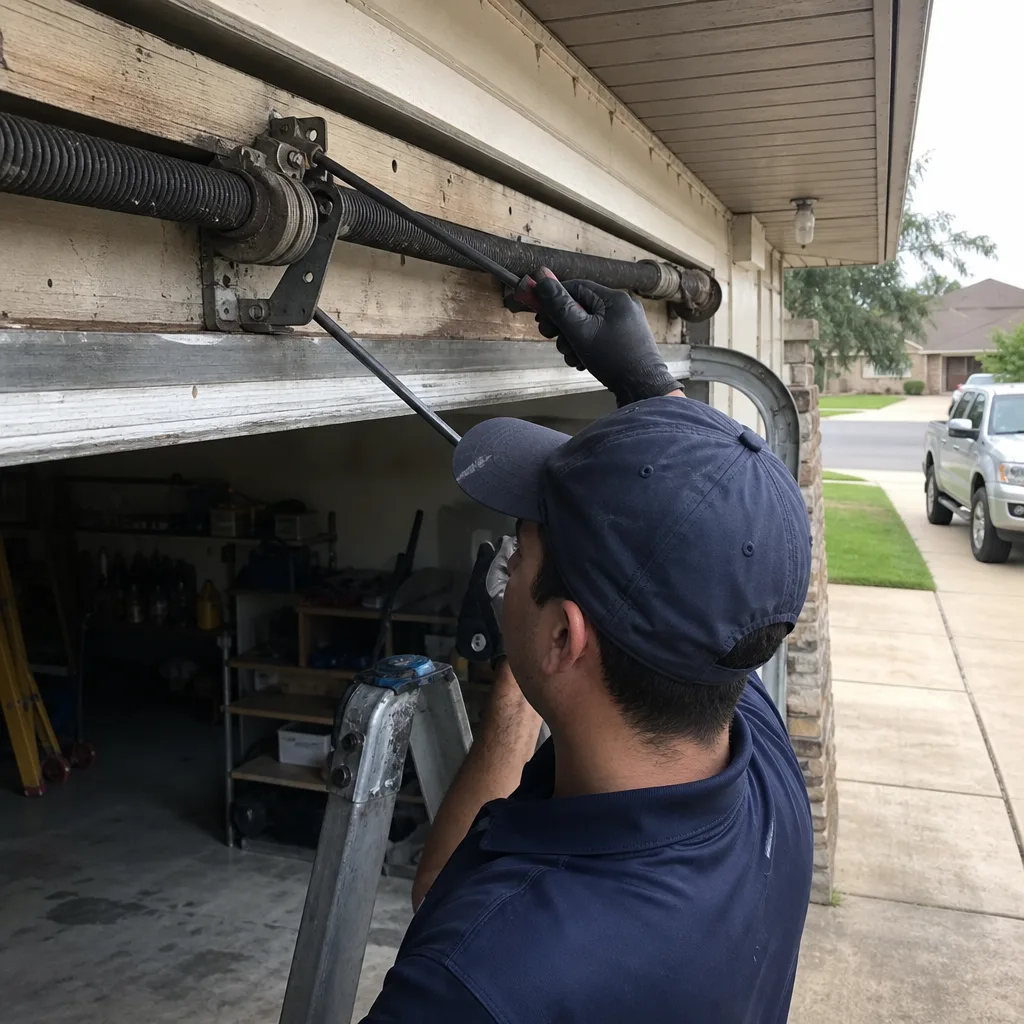 Before
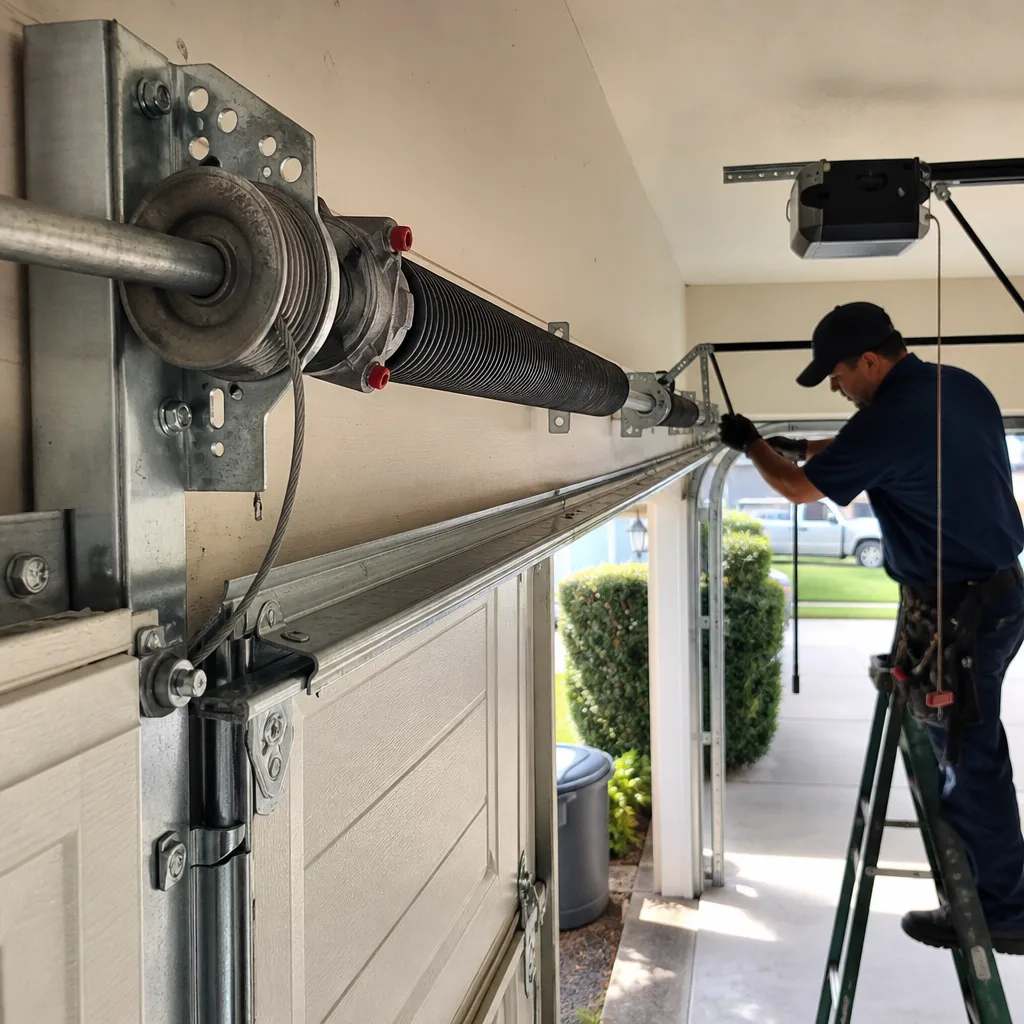 After
After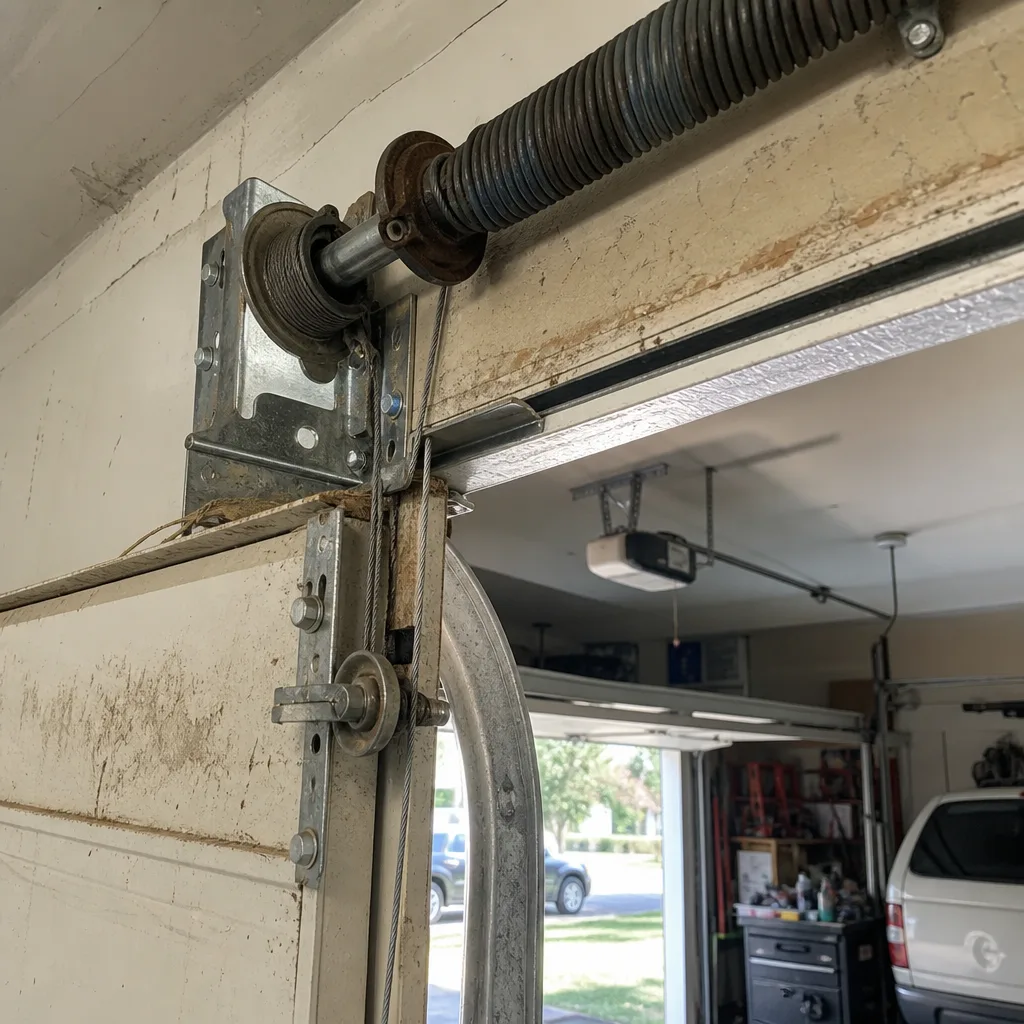 Before
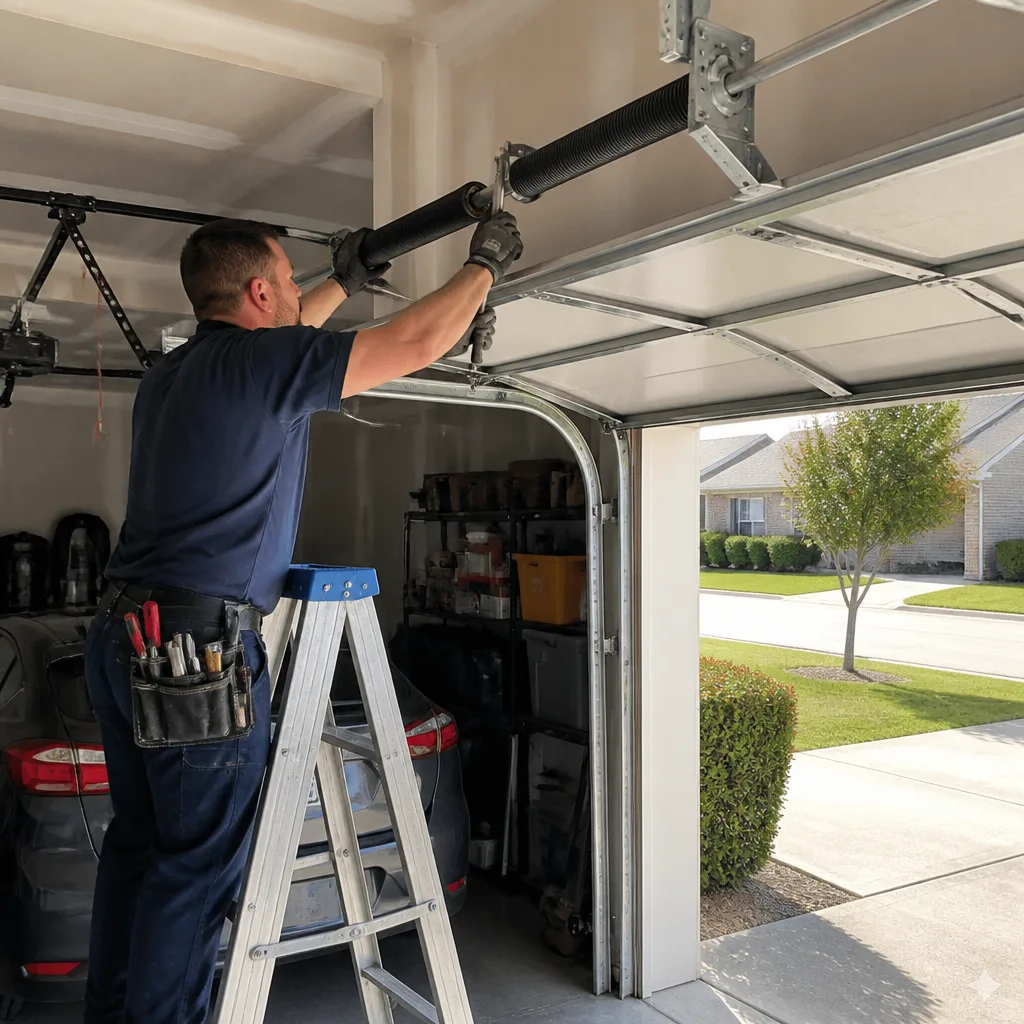 After
AfterGarage Door Repair Maintenance Checklist for Alvin Homeowners
Most maintenance checklists fail Alvin homeowners because they were written for a dry climate. We’ve spent 42 years watching doors in Brazoria County, and the pattern is unmistakable: homeowners who oil their tracks faithfully, check their seals twice a year, and keep a clean garage still replace springs five years too early. The culprit is almost always humidity-specific corrosion at the pivot points, silicone lubricant breaking down in Gulf Coast heat, and driveway settling that masquerades as seal wear. This checklist is built backwards from what actually breaks in Alvin - not what should break in theory.
Quick Answer
A proper garage door maintenance routine for Alvin homeowners means quarterly silicone lubrication of hinges, rollers, and bearing plates (never the track), monthly visual inspection of cables and springs for rust or fraying, annual bottom-seal gap testing against driveway settling, and a seasonal force-balance check to catch spring fatigue before failure. In Southeast Texas humidity, skip WD-40 and white lithium entirely - they attract moisture and gum up in our heat.
Table of Contents
- Why Alvin’s Climate Changes Everything
- Quarterly Maintenance: The Silicone Protocol
- Monthly Visual Inspection Routine
- Bottom Seal and Weatherstripping: The Alvin-Specific Sequence
- Spring Tension Test: A Safe Force-Balance Check
- Annual Deep Inspection and Part Replacement Timeline
- The One-Page Seasonal Log for Faster Service Calls
- Common Mistakes to Avoid
- When to Call a Professional
- Frequently Asked Questions
- The Bottom Line
Why Alvin’s Climate Changes Everything
Southeast Texas garage doors live a harder life than their counterparts in Dallas or Phoenix. Alvin sits 43 feet above sea level in Brazoria County, where average annual humidity hovers near 78% and summer temperatures routinely push past 95 degrees with heat indices well over 100. That combination creates three specific failure modes that generic maintenance guides never address.
Moisture migration into metal components. In dry climates, a light oil film protects steel parts for months. In Alvin, that same oil film becomes a moisture trap. We’ve pulled apart hinges in Friendswood and Manvel that looked freshly lubricated but were rust-pitted underneath because the homeowner used a petroleum-based product that never dried. The humidity simply condensed beneath it.
Thermal cycling of seals and gaskets. A south-facing garage door in Alvin absorbs direct solar radiation for six to eight hours daily in summer, then cools rapidly when afternoon thunderstorms roll in from the Gulf. That daily expansion-contraction cycle degrades rubber and vinyl seals two to three times faster than in shaded or temperate environments. A bottom seal that lasts eight years in Ohio needs replacement in four here - sooner if the driveway has settled.
Wind-borne salt and agricultural dust. Alvin’s position between the Gulf and the rice fields of Brazoria County means doors face a unique particulate load. Salt crystals from onshore flow accelerate corrosion at cable terminations. Fine silt from field operations works into roller bearings and track interfaces, creating abrasive wear that mimics lubrication failure.
These three factors mean an Alvin maintenance checklist cannot simply copy national guidance. It must specify products, frequencies, and inspection sequences that account for local conditions. The sections below do exactly that.
Quarterly Maintenance: The Silicone Protocol
This is where most Alvin homeowners go wrong, and where the biggest single improvement in door longevity happens. The wrong lubricant in this climate actively damages components. The right one, applied to the right points, buys years of service.
Why WD-40 and White Lithium Fail Here
WD-40 is a water displacement formula and light solvent, not a lubricant. It evaporates within days in Alvin heat, leaving a sticky residue that traps humidity and dust. White lithium grease performs better in dry cold but separates in sustained heat above 90 degrees - the oil component runs, the soap base thickens, and the result is uneven protection that cakes in roller bearings.
Silicone spray lubricant, specifically a formulation with Teflon or PTFE additive, outperforms both in Southeast Texas conditions. It dries to a dry film that does not attract dust, maintains lubricity across a wide temperature range, and resists washout from humidity. We specify Blaster Garage Door Lubricant or 3-IN-ONE Professional Garage Door Lubricant for homeowners who ask, but any silicone-based product labeled for garage door use will serve.
The Six Points to Hit Every Quarter
- Hinge knuckles. Apply a brief burst at each pivot point where hinge leaves meet. Work the door through one full cycle afterward to distribute. In Alvin, check for orange-brown staining at hinge barrels - early rust that silicone prevents but petroleum products hide.
- Roller bearings. Steel rollers have a bearing at the center; nylon rollers have a sealed bearing at the stem. Hit the bearing surface, not the roller wheel itself. If rollers squeak after lubrication, the bearing is failing - replacement is needed, not more oil.
- Bearing plates. The stationary plate at top center of the door frame holds the torsion spring shaft. The bearing inside sees constant load and rotation. A single spray into the bearing gap reduces wear that otherwise shows as a grinding sound during opening.
- Spring coils. Light mist across the torsion spring surface prevents inter-coil corrosion. Do not drench - excess runs onto the shaft and attracts debris. This is inspection as much as lubrication: look for gaps between coils that indicate loss of tension.
- Lock mechanism. If your door has a manual lock, the internal components corrode faster in Alvin humidity than most homeowners notice. A brief spray into the keyway and bolt slot keeps operation smooth.
- Weatherstrip contact surfaces. The vinyl or rubber seal along the door edges drags against the frame. Light silicone reduces friction and prevents the seal from tearing at contact points.
What to never lubricate: The track itself. Lubricated tracks collect dust and grit, accelerating roller wear. The track should be clean and dry. Wipe with a damp cloth if needed, then dry thoroughly.
Quarterly means March, June, September, and December for Alvin - aligning with seasonal transitions when humidity shifts most dramatically. Mark your calendar or use the log template in the section below.
Monthly Visual Inspection Routine
A five-minute walk-around once a month catches problems before they become emergency calls. Do this in daylight, door closed, with a flashlight for shadowed areas.
The Four-Point Scan
- Cable condition. Look at both lift cables, running from bottom bracket to drum at top. Fraying appears as fuzzy or unwound strands - any visible fraying means replacement, not monitoring. In Alvin, check particularly at the bottom bracket where salt and moisture concentrate. Rust staining without fraying is early warning; note it on your log.
- Spring integrity. Torsion springs sit horizontally above the door. Look for coil separation gaps that weren’t there before - a sign of tension loss. Check for rust scaling, which weakens wire cross-section. In our experience, Alvin springs with surface rust but intact coating typically have 2-3 years of service left; springs with deep pitting need replacement planning.
- Hardware tightness. Visually inspect all bolts and screws for loosening. Pay attention to roller bracket fasteners at each door section joint - these carry dynamic load and work loose over time. Do not tighten torsion hardware yourself; that’s professional work.
- Door balance at rest. Close the door fully, then disconnect the opener (pull the red release cord) and lift manually to waist height. A properly balanced door stays put. If it rises or falls on its own, spring tension is off - see the force-balance test below for quantification.
Monthly inspection is also when you listen. Grinding, popping, or squealing that persists after quarterly lubrication indicates mechanical wear, not maintenance neglect. Note the sound character on your log - it helps technicians diagnose faster.
Bottom Seal and Weatherstripping: The Alvin-Specific Sequence
National guides tell you to “check the seal for cracks.” In Alvin, cracks are rarely the problem. Driveway settling, thermal deformation of the door bottom, and humidity-swollen wood frames create gap patterns that seal replacement alone won’t fix.
The Gap Inspection Sequence
Close the door fully on a dry day. From inside the garage, look for daylight under the seal at multiple points. Use this specific order:
- Center gap test. Daylight in the middle with contact at both ends indicates a bowed door bottom or settled driveway center. Common in Alvin homes built on fill soil, particularly in developments east of Highway 35 where ground consolidation continues for years after construction.
- End gap test. Daylight at one corner with seal contact elsewhere signals tilted door or uneven driveway slab. Check if the gap side matches the direction of driveway slope - water runoff patterns often reveal settling before visual inspection does.
- Intermittent gap test. Light showing through in patches suggests seal deformation or debris accumulation in the retainer channel. Clean the channel with a putty knife; if gaps persist, the seal itself has taken a set from thermal cycling.
Weatherstripping: Sun Exposure Changes Everything
The perimeter weatherstripping on an Alvin garage door faces dramatically different conditions depending on orientation. A south or west-facing door receives direct sun for 6-8 hours daily; north-facing doors may see none. This changes replacement intervals significantly:
- Direct sun exposure (south/west): Vinyl D-seal degrades in 3-4 years; rubber bulb seal in 4-5 years. UV cracking appears first on the exterior face. Check annually, replace at first significant cracking.
- Shaded or north-facing: Vinyl lasts 6-7 years; rubber 8-10. Humidity still affects adhesion, so check for frame separation even when material looks sound.
- Mixed exposure (east-facing morning sun): Intermediate timeline, but morning dew followed by rapid heating accelerates certain rubber formulations. Inspect at 4 years.
For Alvin homeowners, we recommend EPDM rubber bulb seal for replacement - it handles UV and humidity better than PVC alternatives. The retainer style must match your door: Wayne Dalton uses a specific T-channel profile, while Clopay and Amarr typically use standard 1/4-inch T-bulb retainers. Bring a sample to the hardware store, or call us with your door model.
Spring Tension Test: A Safe Force-Balance Check
Torsion springs carry lethal energy. This test involves no tools, no disassembly, and no contact with the spring itself - but it tells you precisely where you stand on remaining service life.
Why Spring Failure Matters in Alvin
Spring replacement is the most common emergency call we receive in Brazoria County, and it’s almost always preventable. A failed spring strands your car, damages the door, and often twists the top section when the cable goes slack. The national average spring life is 10,000 cycles; in Alvin’s humidity, corrosion-accelerated fatigue typically reduces that by 15-20% unless quarterly lubrication is maintained.
The Force-Balance Procedure
- Close the door fully. Disconnect the opener using the red emergency release cord.
- Lift the door manually from the bottom center handle, smoothly, until it reaches the horizontal position (door parallel to floor).
- Release the door carefully. Observe its behavior:
- Stays level and stationary: Proper balance. Spring tension matches door weight. Expected remaining life depends on cycle count - typically 5-10 years for a door under ten years old.
- Rises on its own: Over-sprung. The opener works harder than necessary; gear wear accelerates. Less common, but stresses hardware.
- Falls toward closed: Under-sprung. The opener is compensating for weak springs; this is the failure warning. Note how fast it falls: a slow drift means 1-2 years remaining; a rapid drop means months or weeks.
- Lower the door gently and reconnect the opener.
Safety note: If the door is extremely heavy or you cannot lift it smoothly, do not force the test. The spring may already be failed or failing. This is professional territory - torsion springs store enough energy to cause serious injury or death if handled improperly.
Record the result on your seasonal log. A drifting result that worsens over two consecutive tests means schedule replacement at your convenience, not in emergency. That’s the difference this checklist makes.
Annual Deep Inspection and Part Replacement Timeline
Once yearly, spend thirty minutes on components that don’t need quarterly attention but degrade on predictable schedules in Alvin conditions.
The Annual Checklist
- Opener rail and chain/belt. For chain-drive openers (common on older Craftsman and Raynor units), check chain sag - it should dip 1/2 to 3/4 inch at midpoint. Adjust if tighter or looser. For belt-drive LiftMaster and Chamberlain models, inspect belt for cracking at flex points. In Alvin’s heat, belt life is typically 12-15 years versus 15-20 in cooler climates.
- Safety reversal system. Place a 2×4 flat on the floor centerline. Close the door using the opener. It must reverse within 2 seconds of contact. If not, the force setting needs adjustment - a service call, not a DIY project on modern units with electronic force controls.
- Photo-eye alignment. Clean lenses with soft cloth. Misalignment shows as a blinking opener light or door that won’t close. In Alvin, spider webs and humidity film are common causes - clean before assuming hardware failure.
- Track mounting hardware. Check lag bolts securing vertical tracks to jambs and horizontal tracks to ceiling hangers. Look for wall anchor loosening in wood frame construction, common in homes with seasonal humidity cycling.
- Bottom bracket and cable drums. These carry full door weight. Look for cracks in bottom bracket casting, groove wear in cable drums, and proper cable seating in drum grooves. Any anomaly here is immediate professional territory - these components under load can fail catastrophically.
Replacement Timeline for Alvin Conditions
| Component | Typical Life (National) | Alvin Adjusted | Warning Signs |
|---|---|---|---|
| Torsion springs | 10,000 cycles / 10-15 years | 8-12 years | Force-balance drift, coil gaps, rust pitting |
| Rollers (steel) | 10-12 years | 8-10 years | Grinding, wobble, bearing noise |
| Rollers (nylon) | 12-15 years | 10-12 years | Cracked wheels, rough rotation |
| Cables | 15-20 years | 12-15 years | Fraying, rust staining, kinking |
| Bottom seal | 5-8 years | 3-5 years (sun); 6-8 (shade) | Daylight gaps, tearing, permanent deformation |
| Weatherstripping | 5-10 years | 3-5 years (sun); 6-10 (shade) | Cracking, frame separation, hardness |
| Opener belt | 15-20 years | 12-15 years | Cracking at pulleys, tooth wear |
| Opener chain | 20+ years | 15-20 years | Stiff links, excessive sag, rust |
Use this table for planning, not panic. A component at 90% of adjusted life with no warning signs can be budgeted for replacement; the same component showing symptoms needs prompt attention.
The One-Page Seasonal Log for Faster Service Calls
Every time a technician arrives blind, diagnostic time adds to your bill. A simple log, kept on a clipboard in the garage, eliminates most of that overhead and demonstrates to any service company that you’re an informed customer who won’t accept unnecessary work.
The Log Format
Print this template and pencil in results. Replace the sheet annually.
| Date | Quarterly Lube | Monthly Inspection | Force-Balance Result | Notes / Sounds |
|---|---|---|---|---|
| ____/____ | □ | □ | Stays / Rises / Falls | ________________ |
| ____/____ | □ | □ | Stays / Rises / Falls | ________________ |
| ____/____ | □ | □ | Stays / Rises / Falls | ________________ |
| ____/____ | □ | □ | Stays / Rises / Falls | ________________ |
Door information (fill once): Manufacturer: _______ Model: _______ Year installed: _______ Spring type: Torsion / Extension _______ Opener: _______
Service history:
| Date | Company | Work Performed | Parts Replaced |
|---|---|---|---|
| ________ | ________ | ________ | ________ |
When you call garage door repair in Alvin, mention you have a maintenance log. Our technicians know immediately that they can verify your observations rather than starting from zero. On non-emergency calls, that typically saves 15-20 minutes of diagnostic time - which translates directly to labor savings on your invoice.
The log also protects you from repeat failures. If a spring replaced two years ago is showing force-balance drift already, the log proves abnormal wear and supports warranty discussion. Our Mainspring Garage Door Co. home page details our 90-Day Done Right Promise, but the log is your documentation for any service relationship.
Common Mistakes to Avoid
- Using WD-40 as a lubricant. It’s a solvent and water displacer, not a lubricant. In Alvin humidity, it evaporates and leaves a sticky film that accelerates corrosion. We’ve replaced hinges that were “maintained” monthly with WD-40 and were internally rusted solid.
- Lubricating the track. Clean tracks grip rollers properly; oily tracks collect dust and cause roller slippage that mimics balance problems. If your door shudders after track lubrication, that’s why.
- Ignoring driveway settling as the real gap cause. Alvin homeowners often replace bottom seals twice before realizing the concrete has sunk 3/8 inch on one side. The seal is fine; the floor is wrong. Check with a level before buying another seal.
- Testing spring tension with tools or partial disassembly. The force-balance check above is safe because it uses the door itself as the indicator. Any method involving winding bars, set screw adjustment, or cable drum work risks serious injury. This is not hyperbole - we have seen the results.
- Waiting for total failure. A spring that fails at 10 PM on a Friday costs more than one replaced on a Tuesday morning with planning. The log’s purpose is to enable scheduled maintenance, not document emergencies.
- Using the wrong seal profile. Wayne Dalton, Clopay, and Amarr doors use different retainer shapes. A standard T-bulb forced into a Wayne Dalton T-channel tears within months. Match the profile or call with your door model.
- Neglecting opener force settings after spring replacement. New springs change door weight perception. Opener force limits must be recalibrated or the safety reversal system becomes ineffective. Any professional replacement includes this; DIY spring jobs often don’t.
When to Call a Professional
Some maintenance is homeowner work. Some is not, for safety and warranty reasons. Call a technician when you observe any of the following: frayed or separated lift cables; rust pitting or coil gaps in torsion springs; door that won’t stay in force-balance test; opener safety reversal failure; cracked bottom bracket or cable drum; or any grinding, popping, or binding that persists after proper lubrication.
Carl Dutton and the team at Mainspring Garage Door Co. have served Alvin and Brazoria County since 2016, building on 42 years of trade experience. We offer Garage Door Repair services with free estimates in Alvin - no charge to look, diagnose, and quote a flat price before any work begins. Call (936) 246-3925. Our trucks carry springs, cables, rollers, and openers for all major brands, so most jobs finish in a single visit. The price we state is the price on the bill.
Frequently Asked Questions
Quarterly - March, June, September, and December - using silicone-based lubricant on hinge knuckles, roller bearings, bearing plates, spring coils, lock mechanisms, and weatherstrip contact surfaces. Never lubricate the track itself. Monthly visual inspection between lubrication cycles catches problems early. Call (936) 246-3925 if you need product recommendations for your specific door.
In Alvin, premature seal failure usually indicates driveway settling or thermal deformation of the door bottom, not defective material. Check for daylight gaps with a level before assuming the seal is at fault. South and west-facing doors also degrade seals faster from UV exposure - EPDM rubber outlasts vinyl in direct sun. If the gap pattern shows center or corner daylight rather than even wear, the problem is structural, not the seal.
No. Torsion springs store enough torque to cause serious injury or death if mishandled. The force-balance check in this guide safely indicates spring condition without tool contact. If your test shows rising or falling behavior, schedule professional service. At Mainspring Garage Door Co., we quote spring replacement upfront with no hidden charges, and our 90-Day Done Right Promise covers the work in writing.
Typically 8-12 years in Alvin versus 10-15 in drier climates, assuming quarterly silicone lubrication. Without lubrication, corrosion-accelerated fatigue can reduce life to 5-7 years. The force-balance test monthly and lubrication quarterly are the two factors most within homeowner control. Actual cycle count matters too - a door used four times daily reaches cycle limits faster than one used once.
Our $89 Seasonal Tune-Up includes full safety inspection, force-balance verification, hardware torque check, track alignment assessment, opener safety reversal test, photo-eye cleaning and alignment, and complete lubrication with silicone-based products. We note findings on your maintenance log and quote any needed repairs with flat pricing before starting work. Senior and veteran homeowners receive an additional 5% discount.
Doors under 15 years with isolated component failure - one bad spring, worn rollers, failed opener - typically justify repair. Doors over 20 years with multiple worn components, significant rust, or outdated safety features often make more sense to replace, particularly if energy efficiency matters. We offer free second opinions on any written estimate for garage door installation in Alvin or repair, with no obligation. Call (936) 246-3925 to discuss your specific door.
Heat expansion changes door balance and opener force requirements. In Alvin’s summer, metal components expand, seals soften and drag more, and thermal load on the opener motor reduces effective power. If the opener strains only in hot weather, the door is likely slightly out of balance or the opener force settings need seasonal adjustment. This is not normal operation - it indicates a maintenance need that will worsen.
The Bottom Line
Alvin garage doors fail predictably: humidity-corroded pivot points, thermally cycled seals, and springs weakened by moisture infiltration. The maintenance checklist above addresses each failure mode with specific products, frequencies, and inspection sequences built for Southeast Texas conditions, not generic national guidance. Quarterly silicone lubrication, monthly visual inspection, annual deep checks, and the force-balance test create a maintenance rhythm that extends component life and eliminates emergency calls.
The one-page log turns your effort into faster, cheaper service when professional help is needed. And knowing when to call - cables, springs, brackets, safety systems - keeps maintenance from becoming injury.
Carl Dutton and our team at Mainspring Garage Door Co. have maintained, repaired, and replaced doors across Alvin since 2016. We answer our own phones 24 hours a day, arrive with parts on the truck, and state every price before the work starts. For a free estimate, a second opinion, or our $89 Seasonal Tune-Up, call (936) 246-3925.
Written by Carl Dutton, Owner at Mainspring Garage Door Co., serving Alvin since 2016.