
Last updated September 10, 2026
Full 25-point door and opener safety check with every visit - springs, cables, rollers, tracks, and your LiftMaster or Chamberlain opener included
You get a price before we start. It does not change when the truck arrives.
 Before
 After
After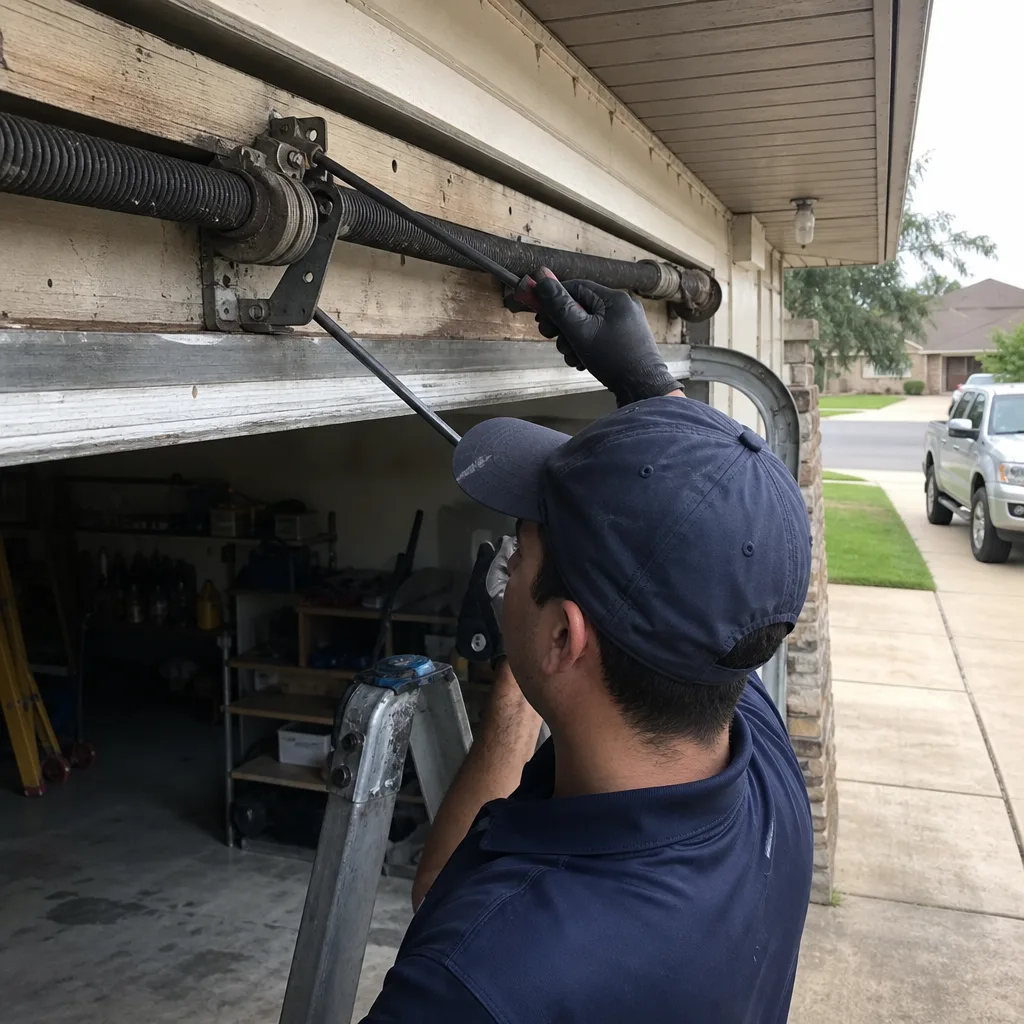 Before
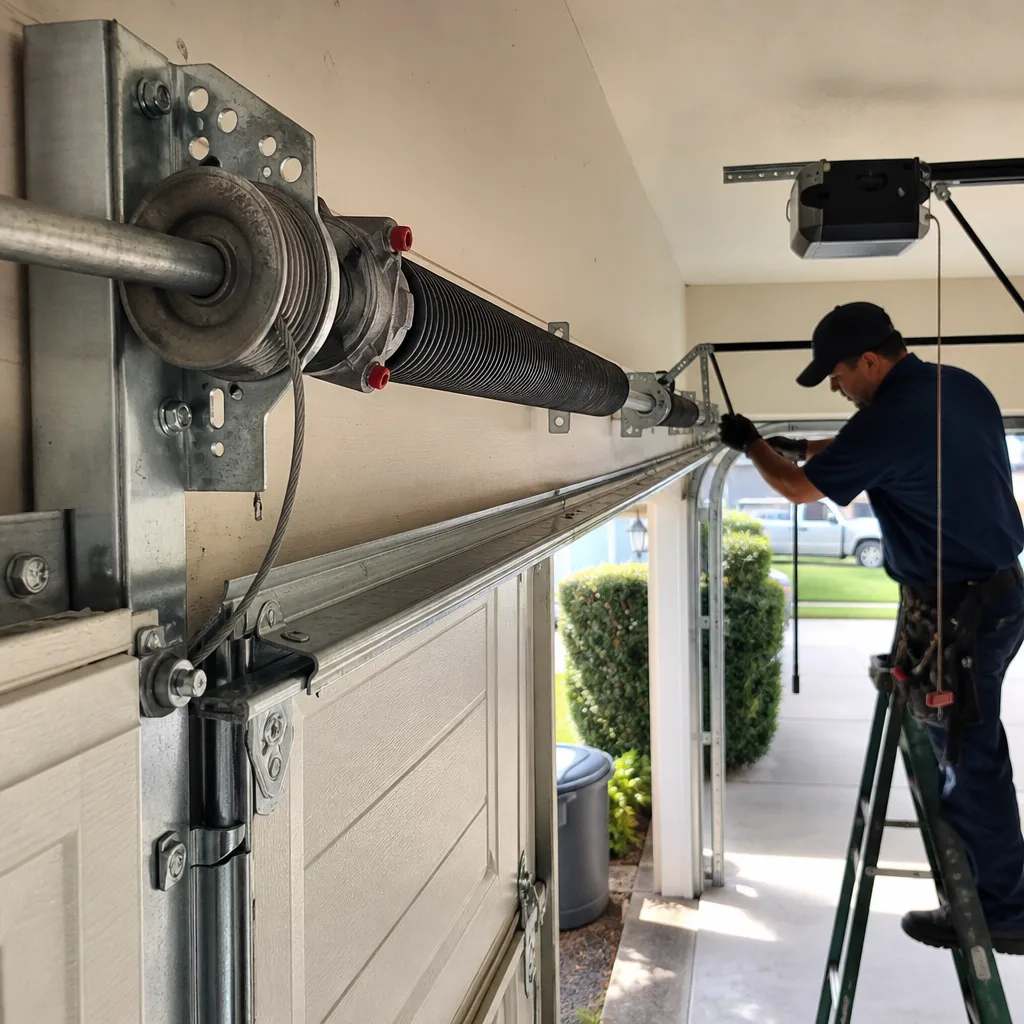 After
After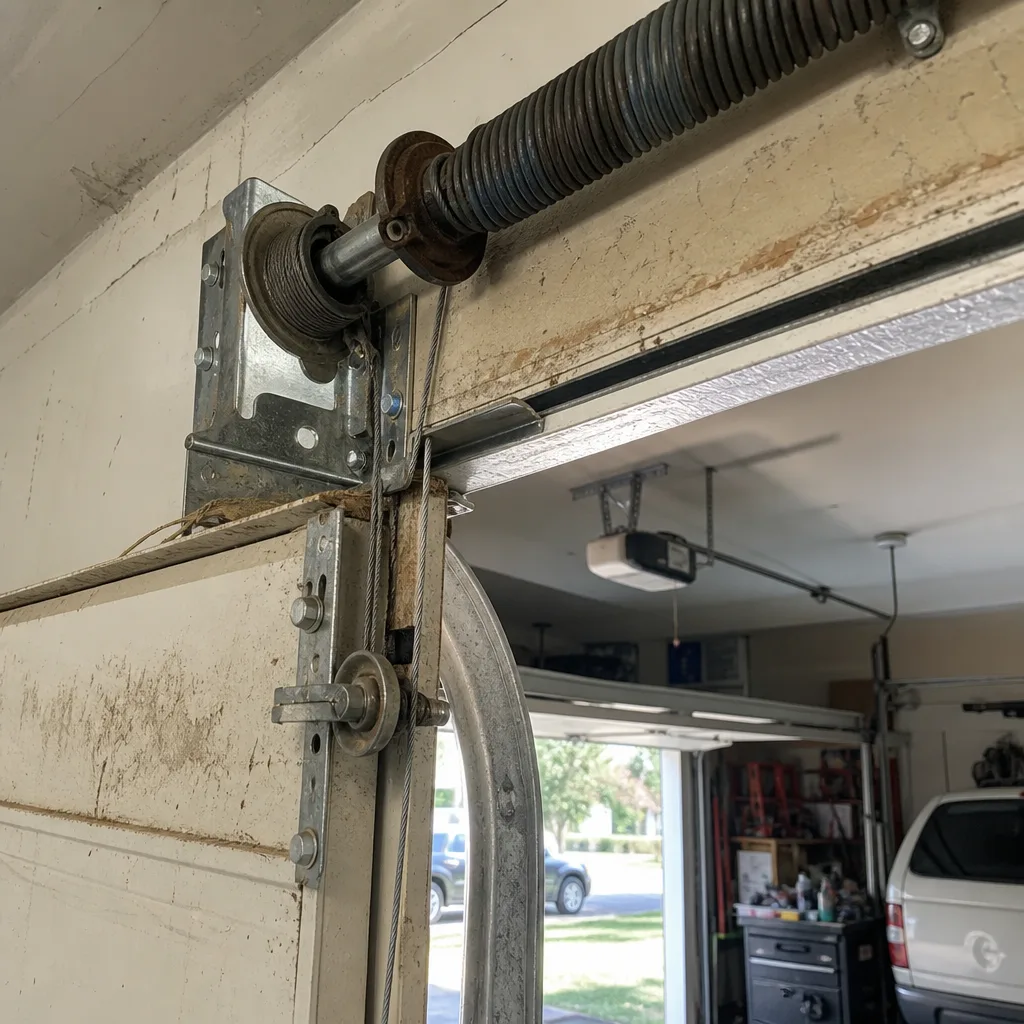 Before
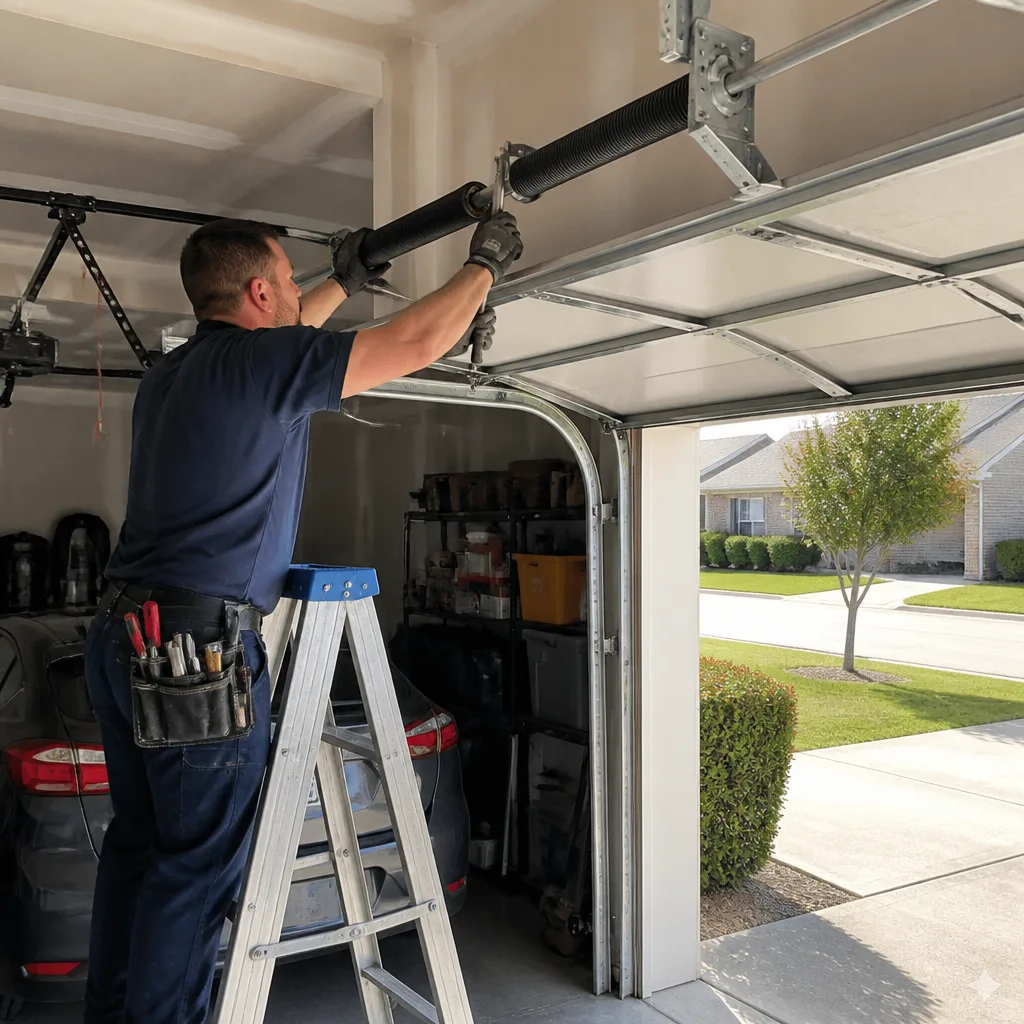 After
AfterSeasonal Garage Door Care for Alvin: Year-Round Homeowner’s Guide
The week after a Gulf Coast freeze event is one of the busiest service weeks of the year for garage door companies in Southeast Texas. Not because of the cold itself, but because the preceding summer heat already weakened the springs, and the cold finished them off. In Alvin, we don’t have four equal seasons. We have a long, punishing heat season, a brief freeze window, and a year-round humidity baseline that makes the standard spring/fall maintenance calendar irrelevant without adjustment. This guide shows you how to protect your garage door through Alvin’s actual climate pattern, not a textbook version of it. For more guides & resources on local garage door care, see our blog.
Quick Answer
Seasonal garage door care in Alvin means preparing for heat damage in May, not October. The priority order is: summer heat prep (lubrication, weatherstripping, spring inspection), hurricane season wind-load verification before June 1, brief freeze-prep for January cold snaps, and scheduling major repairs like spring replacement in fall when demand is lowest. A $89 seasonal tune-up in late April typically prevents the emergency calls we field every July and August.
Table of Contents
- Why Alvin Needs a Heat-First Seasonal Model
- Summer Prep: What to Do in May
- Hurricane Season Readiness
- The Fall Window: Best Time for Major Service
- Winter Freeze Prep for Alvin’s Brief Cold Snaps
- Year-Round Humidity: The Hidden Factor
- DIY Inspection Checklist by Season
- Common Mistakes to Avoid
- When to Call a Professional
- Frequently Asked Questions
Why Alvin Needs a Heat-First Seasonal Model
Most garage door maintenance guides assume a four-season climate with equal threats. That model fails in Alvin. Our average high hits 90°F by May and stays there through September. Attic temperatures over attached garages routinely reach 120°F. The torsion spring above your door is essentially a coiled steel muscle, and sustained heat accelerates metal fatigue in ways that cold simply doesn’t.
We’ve tracked our service calls across 42 years in this region. In Alvin, spring failures cluster in two windows: late July through August, when cumulative heat stress peaks, and mid-January through early February, when a cold snap strikes springs that were already compromised. The January failure is almost always a summer-weakened spring that the cold finished. The homeowner thinks it’s a winter problem. It isn’t.
Here’s what Alvin’s actual temperature arc means for your door:
- May through September: Heat is the primary enemy. Lubricants thin, metal expands and fatigues, weatherstripping degrades.
- June 1 through November 30: Hurricane season adds wind-load and debris-impact risks.
- October through November: The optimal service window. Demand is down, parts are available, and you’re ahead of winter stress.
- December through February: Brief freeze risk, but mostly a recovery period from summer damage.
- March through April: Humidity spikes as Gulf moisture returns. Rust and corrosion accelerate on untreated hardware.
The standard advice to “service your door in spring and fall” isn’t wrong, but in Alvin the spring service should be more intensive and the fall service should focus on replacement of worn components before they fail in winter. If you only do one service appointment per year, make it late April. That’s the move that prevents the July emergency. For a full breakdown of what this should include, see The Complete Guide to Garage Door in Alvin.
Neighborhoods like Friendswood Crossing, Mustang Bayou Estates, and the older homes near Alvin Community College see this pattern most clearly. The homes built in the 1970s and 1980s often have original or near-original hardware that has survived decades of heat cycles. The spring doesn’t warn you before it breaks. It just breaks, usually at 6:47 AM when you’re trying to leave for work.
Summer Prep: What to Do in May
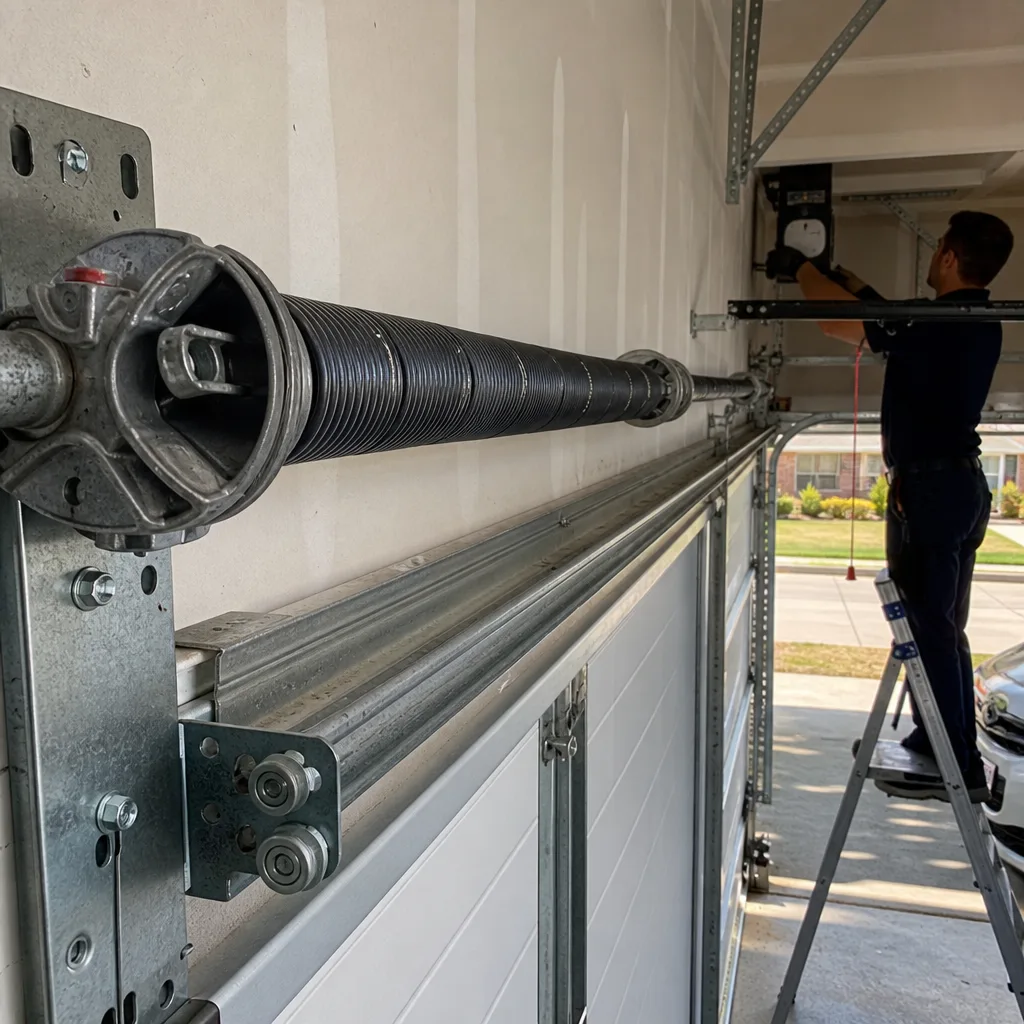
May is the month that determines whether your garage door makes it through summer without a failure. The temperatures are still moderate enough to work comfortably, and you can address problems before they become emergencies. Here’s what we do on every $89 Seasonal Tune-Up, and what you should verify yourself if you’re handy.
1. Inspect and Replace Weatherstripping
This is the step most Alvin homeowners skip, and it’s costing them on their electric bill. The gap between your garage door and the frame, plus the bottom seal against the concrete, is the primary path for hot, humid Gulf air to enter your garage. If your garage is attached, that hot air pressurizes the wall shared with your living space and forces your air conditioner to work harder.
Check the vinyl or rubber seal along the bottom of the door. In Alvin’s UV exposure, these typically harden and crack within 3-4 years. The side and top seals, usually PVC or brush-style, degrade similarly. Replacement is straightforward on most Clopay and Amarr doors, but the correct profile matters. A generic seal from the hardware store often fits poorly and wears faster. We carry the factory profiles for all major brands on our trucks.
2. Lubricate with Heat-Stable Products
Standard white lithium grease thins significantly above 100°F. In an Alvin garage in August, it can run off the track entirely. We use a synthetic lubricant rated for 400°F+ that maintains viscosity through our summer extremes.
Apply lubricant to:
- The torsion spring (full length, light coat)
- Roller bearings (not the track itself)
- Hinge pivot points
- The opener chain or screw drive
- Lock mechanism, if present
Safety note: The torsion spring above your door is under extreme tension and can cause serious injury or death if mishandled. If you are not trained in garage door spring systems, leave this to a professional. We see emergency calls every summer from homeowners who attempted DIY lubrication and dislodged a spring anchor. It’s not worth the risk.
3. Test Spring Balance
Disconnect the opener by pulling the red release cord. Manually lift the door to waist height and let go. A properly balanced door will stay in place or drift slowly. If it falls hard or shoots upward, the spring tension is wrong. In Alvin’s heat, springs lose tension gradually. Many homeowners don’t notice because the opener compensates, straining the motor until it fails too.
4. Clear and Inspect the Track
Alvin’s live oak pollen in spring, plus the general Gulf Coast dust, accumulates in the track and hardens. Clean with a cloth, not a lubricant. The track should be dry. Lubricated tracks attract grit and create a grinding paste.
5. Verify Opener Force Settings
Heat-expanded metal components increase rolling resistance. If your opener’s force settings are already at the edge, summer expansion can push it into false obstruction detection, causing the door to reverse randomly or not close fully. Test with a 2×4 laid flat in the door’s path. The door should reverse on contact. If it doesn’t, the down-force is set too high and needs adjustment.
Most Chamberlain and Genie openers have dials or digital settings for this. The procedure varies by model year. If you’re unsure, we include force verification in every tune-up.
Hurricane Season Readiness
Hurricane season runs June 1 through November 30, but in Alvin the real preparation happens before June 1. A garage door is the largest opening in most homes, and if it fails in high wind, the pressure differential can damage the roof structure. Building codes have required wind-load-rated doors in new construction since the post-Ike updates, but many older homes in Alvin still have original doors that predate these standards.
Verify Your Door’s Wind-Load Rating
Check for a label or sticker on the door’s interior surface indicating wind-load rating in PSF (pounds per square foot). For Alvin’s location in Brazoria County, the design wind speed is 130 mph per ASCE 7. If your door lacks a rating label, it may not be wind-load-rated. Replacement with a rated door, typically Clopay or Amarr models with reinforced struts, is the only proper solution. We handle this through our Garage Door Installation in Alvin service.
Inspect Wind-Load Bracing
Rated doors use horizontal struts or vertical posts to reinforce the panel sections. Check that:
- All struts are present and securely fastened (not missing bolts or corroded through)
- Vertical posts, if your system uses them, slide freely into floor and header brackets
- No panel sections are dented or compromised, which would allow wind penetration
After any near-miss storm, even if your home didn’t suffer visible damage, re-inspect these components. We’ve found wind-stressed struts that appeared intact but had pulled fasteners or micro-fractures that would fail in the next event.
Post-Storm Specific Checks
- Operate the door manually. If binding occurs, the track may have shifted in wind pressure.
- Listen for new noises. Grinding or popping often indicates debris in the track or roller damage from vibration.
- Check opener function. Power surges during storms damage circuit boards in older units. If your Genie or Chamberlain opener behaves erratically after a storm, the logic board may need replacement.
The Fall Window: Best Time for Major Service
October and November are the most underutilized months in Alvin garage door maintenance, and that’s exactly why they’re the best time to schedule significant work. Here’s the pattern we’ve observed over four decades:
Summer emergency calls peak in July and August. Homeowners who deferred maintenance now have failures. Our schedule fills. Parts suppliers run lean. Everyone is reactive.
By October, the emergency rush has passed. Suppliers have restocked. Our technicians have capacity for thorough work rather than triage. And most importantly, you’re addressing wear before the January freeze window that finishes off summer-weakened components.
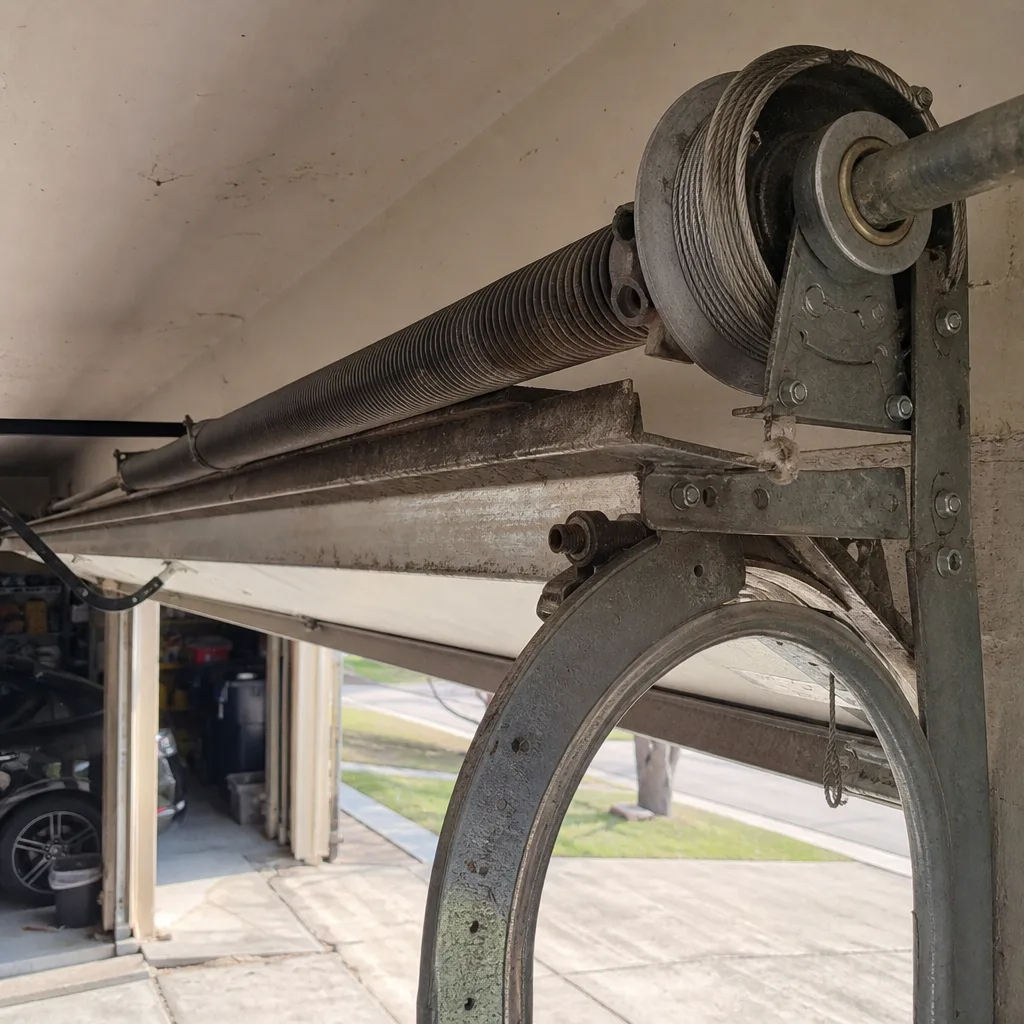
Spring replacement in fall is the single smartest scheduling decision an Alvin homeowner can make. A torsion spring that survived summer with visible fatigue, gaps between coils, or surface rust is a January failure waiting to happen. Replacing it in October means:
- Shorter lead time for scheduling
- Full selection of spring wire sizes in stock
- No emergency premium pricing
- Peace of mind through winter
We also see fewer opener failures in winter from customers who did fall tune-ups. The opener that was straining against a weak spring all summer gets relief before the cold adds extra resistance.
Our Garage Door Repair in Alvin page details what we include in a full service visit. For fall scheduling, mention this guide and we’ll prioritize the components most likely to fail in our climate.
Winter Freeze Prep for Alvin’s Brief Cold Snaps
Alvin’s freezes are infrequent but sharp. The January 2024 event dropped temperatures to 18°F, and we fielded calls for a week afterward. Most were preventable with two simple steps done in advance.
Lubricate Cold-Sensitive Components Before the Freeze
Metal contracts in cold. Clearances that were adequate at 95°F become tight at 25°F. Lubrication prevents the binding that causes openers to stall or springs to snap from sudden load spikes.
Focus on:
- Torsion spring: A light coat of low-temperature synthetic lubricant. The spring is cold-brittle and most vulnerable in its first cycle of the morning after a freeze.
- Roller bearings: Dry bearings seize in cold. A drop of lubricant at each roller prevents the grinding that precedes failure.
- Lock mechanism: If you have a manual lock, it can freeze engaged or disengaged. Graphite lubricant works here, not oil that gums in cold.
Safety note: Do not attempt to free a stuck door by forcing the opener or by manually pulling with excessive force. A frozen door often indicates a spring or cable problem that will release suddenly and without warning. Call for professional service. The force in a torsion spring can cause severe injury.
Test Opener Force Settings
Cold-stiffened components increase resistance. If your opener’s force limits were already marginal from summer wear, the added cold resistance pushes it into failure. Test the safety reverse with a 2×4. If the door doesn’t reverse promptly, the down-force is excessive and dangerous.
After any freeze event, run the door through several cycles and listen. New popping, grinding, or hesitation indicates a component that the cold stressed. Schedule inspection promptly. The damage is done; the question is whether you address it before complete failure.
Year-Round Humidity: The Hidden Factor
Alvin’s average relative humidity hovers near 75% year-round, with summer spikes above 90%. This constant moisture exposure creates problems that dry-climate guides never mention.
Rust and Corrosion on Hardware
Galvanized track, hinges, and fasteners eventually succumb. We see significant corrosion on homes within two miles of Chocolate Bayou or Mustang Bayou, where salt air mixes with humidity. The track surface develops pitting that accelerates roller wear. Hinge pins seize. Fasteners weaken.
Annual inspection should include:
- Track surface condition (pitting, flaking galvanizing, rust streaks)
- Hinge pin rotation (should move freely, not grind)
- Fastener torque (corroded bolts loosen, and vibration completes the failure)
- Cable condition at the bottom bracket, where moisture collects
Wood Door Maintenance
Wood doors, still common in Alvin’s older neighborhoods, absorb moisture and swell. The clearance at the sides and top changes seasonally. A door that fit in October may bind in March. If you have a wood door, check fit monthly during humidity transitions and adjust the track spacing if needed. Factory-finished Clopay and Amarr wood-composite doors resist this better than site-finished solid wood, but no wood product is immune.
Opener Electronics
Circuit boards in the opener motor unit are vulnerable to humidity. Condensation on the board causes erratic behavior, phantom activation, or complete failure. Ensure your opener’s motor compartment has intact seals and that the unit is not exposed to direct rain or sprinkler spray. If your Genie or Chamberlain opener behaves strangely on humid mornings, board corrosion is the likely cause. Replacement is usually more cost-effective than repair for units over 10 years old.
DIY Inspection Checklist by Season
This checklist organizes what you can safely check yourself. Items marked [Pro] involve components under dangerous tension and should be left to trained technicians.
Late April (Pre-Summer)
- Replace bottom seal if cracked or hardened
- Inspect side and top weatherstripping
- Lubricate roller bearings, hinges, opener drive [Pro for spring]
- Test door balance [Pro to adjust]
- Clean tracks with dry cloth
- Verify opener force settings and safety reverse
- Inspect door panels for damage, especially if wind-load rated
Late May (Hurricane Season Start)
- Verify wind-load bracing is intact
- Confirm all strut fasteners are present and tight
- Test manual operation (opener disconnected) for smooth travel
- Clear gutters and drainage above garage door to prevent overflow in storms
October (Fall Service Window)
- Schedule professional tune-up for spring assessment [Pro]
- Inspect track and hardware for corrosion
- Check wood door fit and finish condition
- Test all remote controls and keypad battery
- Verify opener antenna and safety sensors are aligned and clean
December (Pre-Freeze)
- Apply low-temp lubricant to spring, rollers, lock [Pro for spring]
- Test safety reverse function
- Inspect cable condition at bottom brackets [Pro to replace]
- Ensure manual release cord is accessible and functional
Common Mistakes to Avoid
- Waiting for a failure before acting. In Alvin, a broken spring at 7 AM in July means a hot garage, a trapped car, and premium emergency rates. The signs of fatigue are visible months ahead if you look.
- Using WD-40 as a lubricant. WD-40 is a solvent and water displacer, not a lubricant. It strips existing grease and attracts dust. Within weeks, your components run dry. Use a product rated for garage door applications and temperature extremes.
- Ignoring the bottom seal. Alvin homeowners who replace worn weatherstripping typically see measurable cooling cost reduction in attached garages. The seal is cheap. The electricity is not.
- Assuming all springs are equal. Torsion springs are sized to the exact weight and height of your door. A spring with the wrong wire size, length, or winding will fail prematurely and can damage the opener. We measure and calculate on every replacement.
- Neglecting post-storm inspection. Even if your door operated after a near-miss hurricane, wind pressure stresses components in ways that show up months later. The inspection takes 10 minutes. The failure at the wrong time costs far more.
- Setting opener force too high. Homeowners sometimes increase down-force when the door won’t close, masking a balance or track problem. This creates a crushing hazard and accelerates opener wear. Fix the underlying problem instead.
When to Call a Professional
Some situations require trained technicians with the right tools and parts on the truck. Call for professional service when:
- The door is off the track or has damaged cables
- The torsion spring is broken, gapped, or shows surface rust
- The opener strains, reverses randomly, or fails to lift the door
- You need wind-load bracing inspection or installation
- You’re unsure of your door’s spring balance or force settings
At Mainspring Garage Door Co. home, we answer calls with a live person 24 hours a day, including nights, weekends, and holidays. Our technicians arrive with springs, cables, openers, and hardware for all major brands already on the truck, so most jobs are completed in a single visit. Every job carries our 90-Day Done Right Promise in writing: if it’s not right, we come back at no charge, no paperwork, no arguing.
Mainspring Garage Door Co. offers free estimates in Alvin. Call (936) 246-3925.
Frequently Asked Questions
Our seasonal tune-up is $89 and includes full inspection, lubrication of all accessible components, spring balance test, opener force verification, and weatherstripping assessment. For detailed pricing on larger projects, see our Garage Door Cost Breakdown: The Alvin Homeowner’s Reference for 2026. Seniors and veterans receive a permanent 5% discount on all services. Call (936) 246-3925 to schedule.
You can apply lubricant to the spring’s surface, but we don’t recommend it unless you’re familiar with torsion spring systems. The spring is under extreme tension and can cause serious injury if the winding cones or anchor brackets are disturbed. Many of our emergency calls start with a homeowner who was “just lubricating.” We include spring lubrication in every tune-up, done safely.
Standard torsion springs in Alvin’s heat and humidity typically last 8-12 years with normal use, compared to 15-20 years in milder climates. The heat accelerates metal fatigue, and humidity promotes surface corrosion that creates stress risers. If your springs are original to a home built before 2010, they’re likely due for replacement regardless of apparent condition.
Most commonly, the safety sensors are misaligned, obstructed, or sun-bleached. In Alvin, direct afternoon sun into a west-facing garage can blind the receiver sensor. Less commonly, increased rolling resistance from track damage, roller wear, or spring fatigue triggers the opener’s obstruction detection. Check the sensor LEDs first. If both are solid and the problem persists, the cause is mechanical and needs professional diagnosis.
Current building codes require wind-load-rated doors for new construction and replacement in our wind zone. If your home was built before the post-Hurricane Ike code updates and still has its original door, it may not be rated. An unrated door is a significant risk during tropical storm or hurricane conditions. We can inspect and quote replacement with a rated Clopay or Amarr system if needed.
If any work we perform is not right, we return and make it right at no charge. No paperwork to file, no dispute process, no expiration date within the 90 days. It’s stated in writing on every invoice. We’ve honored this promise since 1984, and it’s why customers who call us once tend to call us for everything after.
The Bottom Line
Alvin’s garage doors face heat first, humidity always, wind seasonally, and cold occasionally. The standard maintenance calendar doesn’t fit. Prioritize May preparation over October, schedule major work in the fall lull, verify wind-load bracing before June 1, and never ignore the warning signs that summer heat leaves behind. A $89 tune-up in April prevents the emergency call in July. A spring replaced in October doesn’t trap your car in January. The pattern is predictable, and so is the protection.
We’ve served this region since 1984, and we’ve learned that the homeowners who stay ahead of the climate never have to think about their garage door again. That’s the square deal we offer. If you’d like us to walk through your door’s condition, call (936) 246-3925 for a free estimate. We’ll state the flat price before any work begins, and we’ll stand behind it in writing.
Written by Carl Dutton, Owner at Mainspring Garage Door Co., serving Alvin since 2016.