
Last updated September 10, 2026
Full 25-point door and opener safety check with every visit - springs, cables, rollers, tracks, and your LiftMaster or Chamberlain opener included
You get a price before we start. It does not change when the truck arrives.
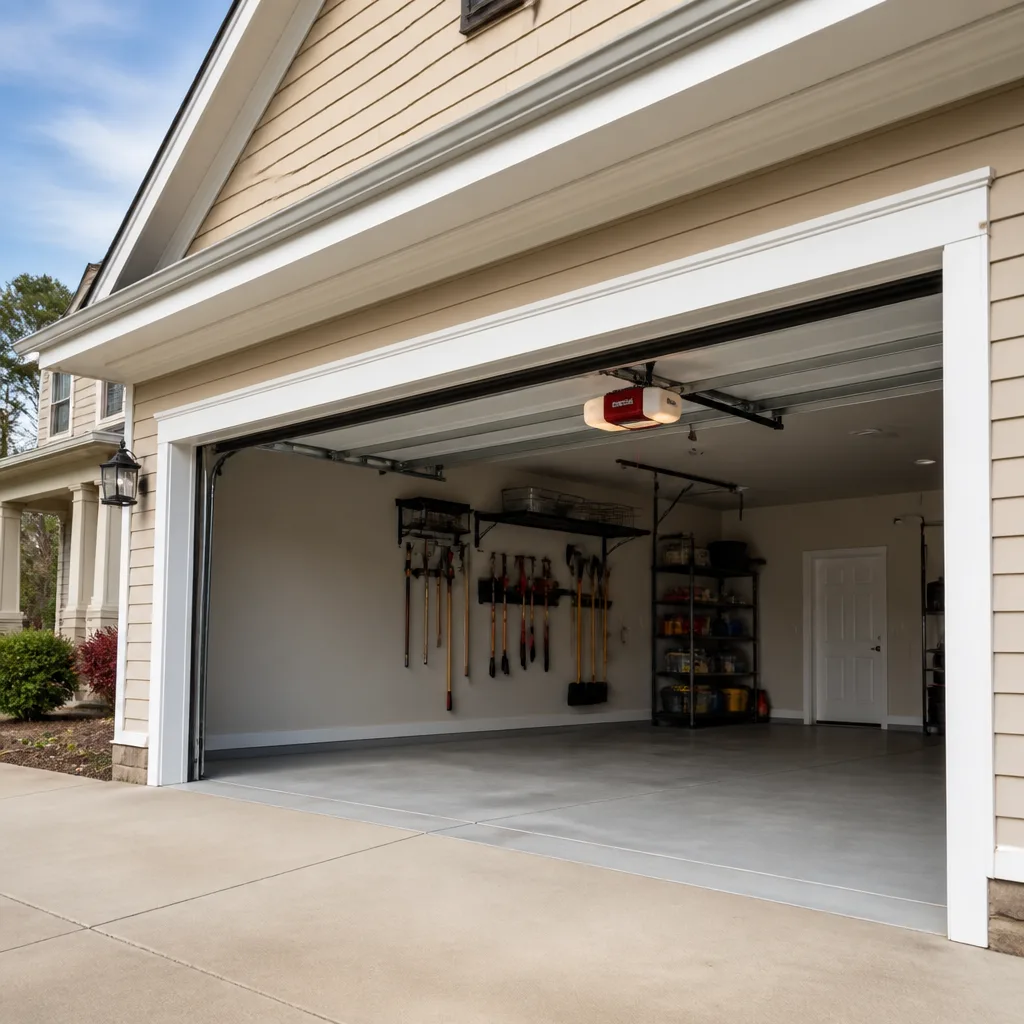
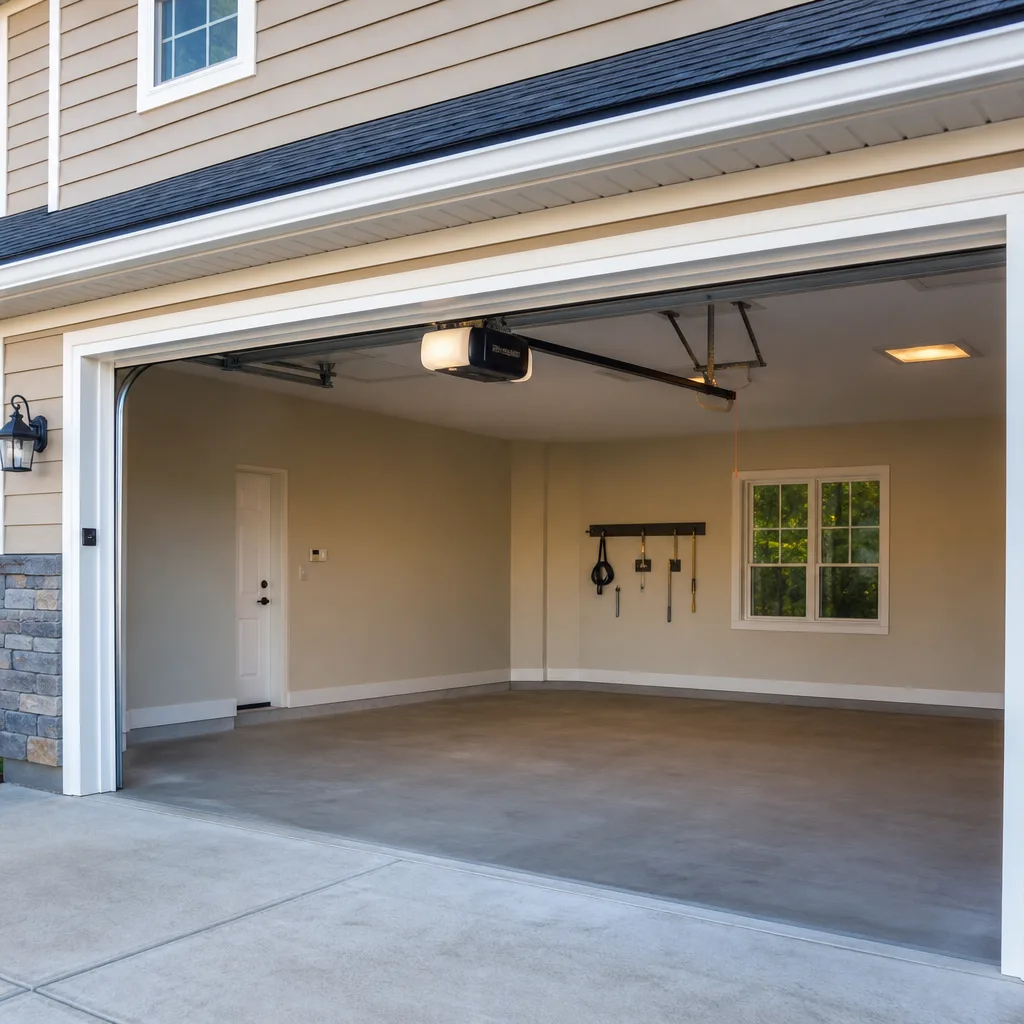
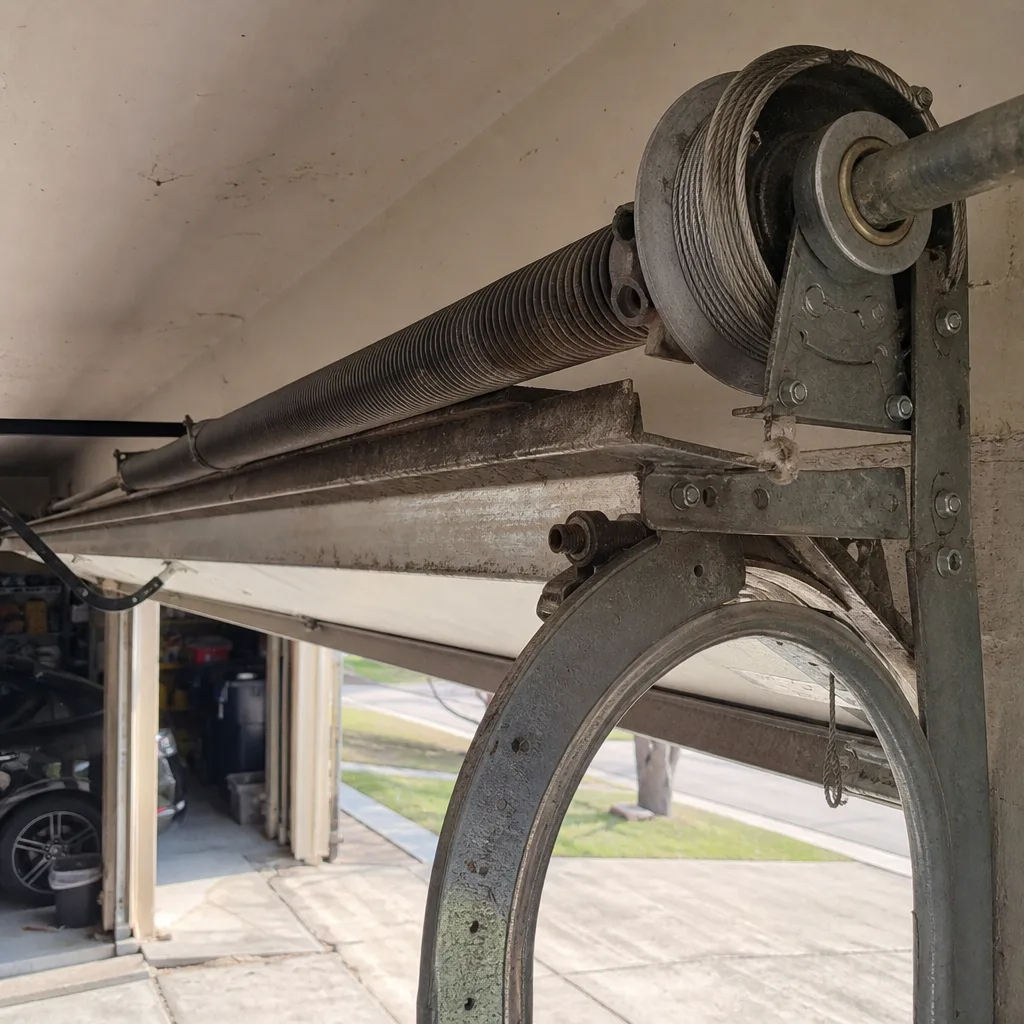 Before
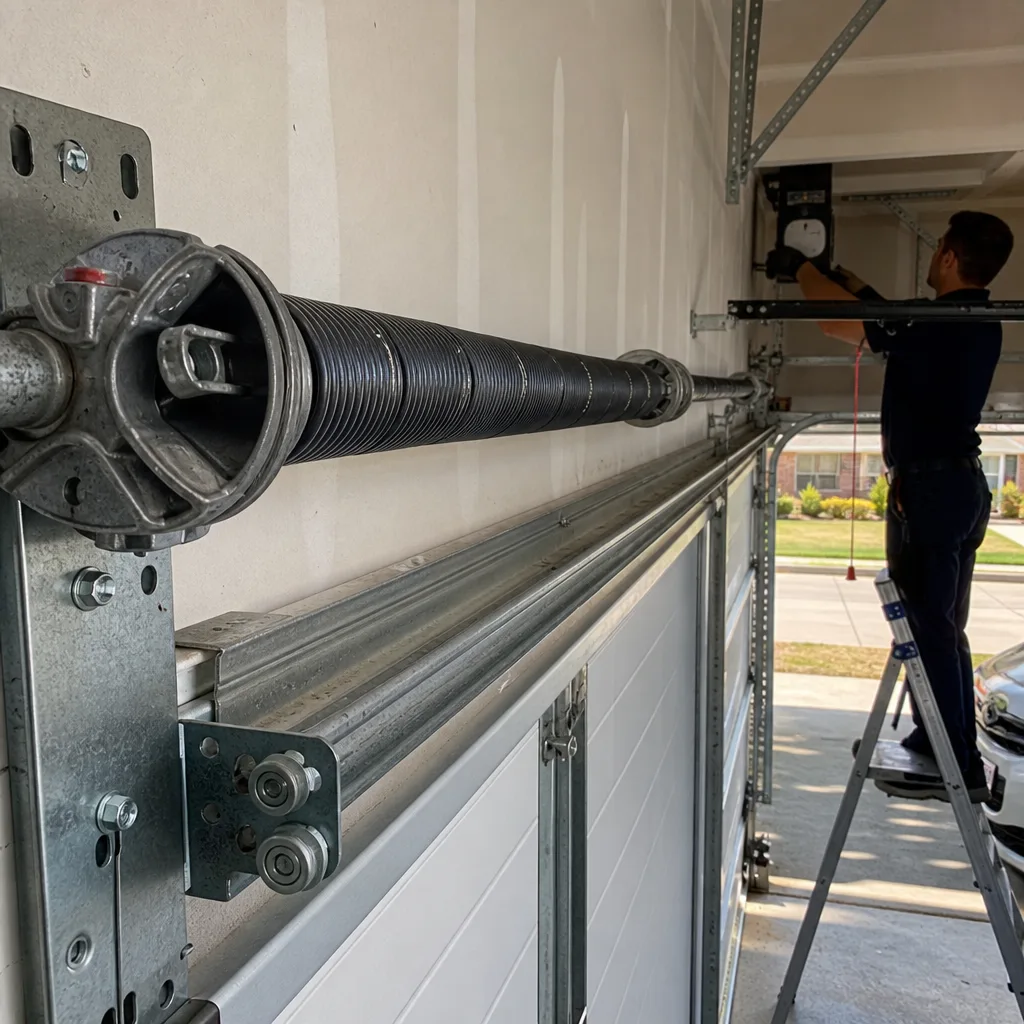 After
After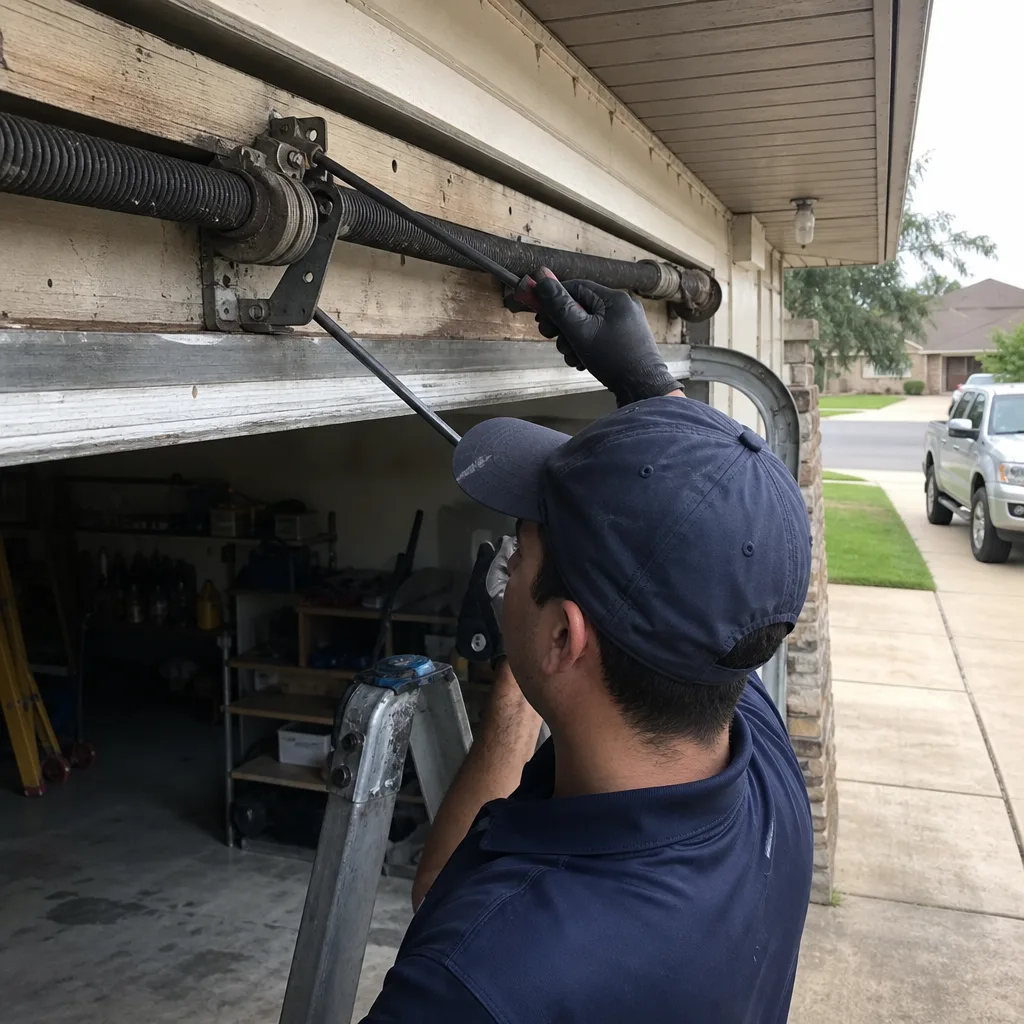 Before
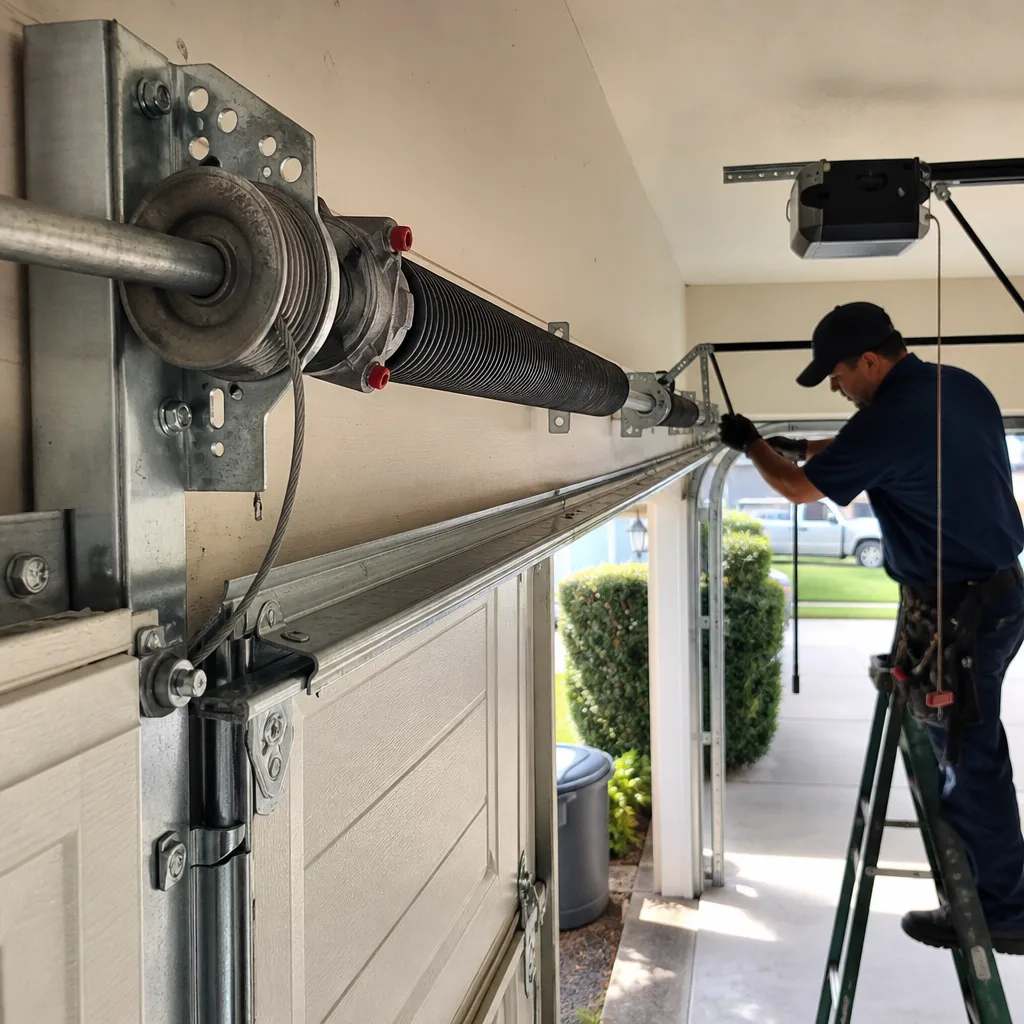 After
After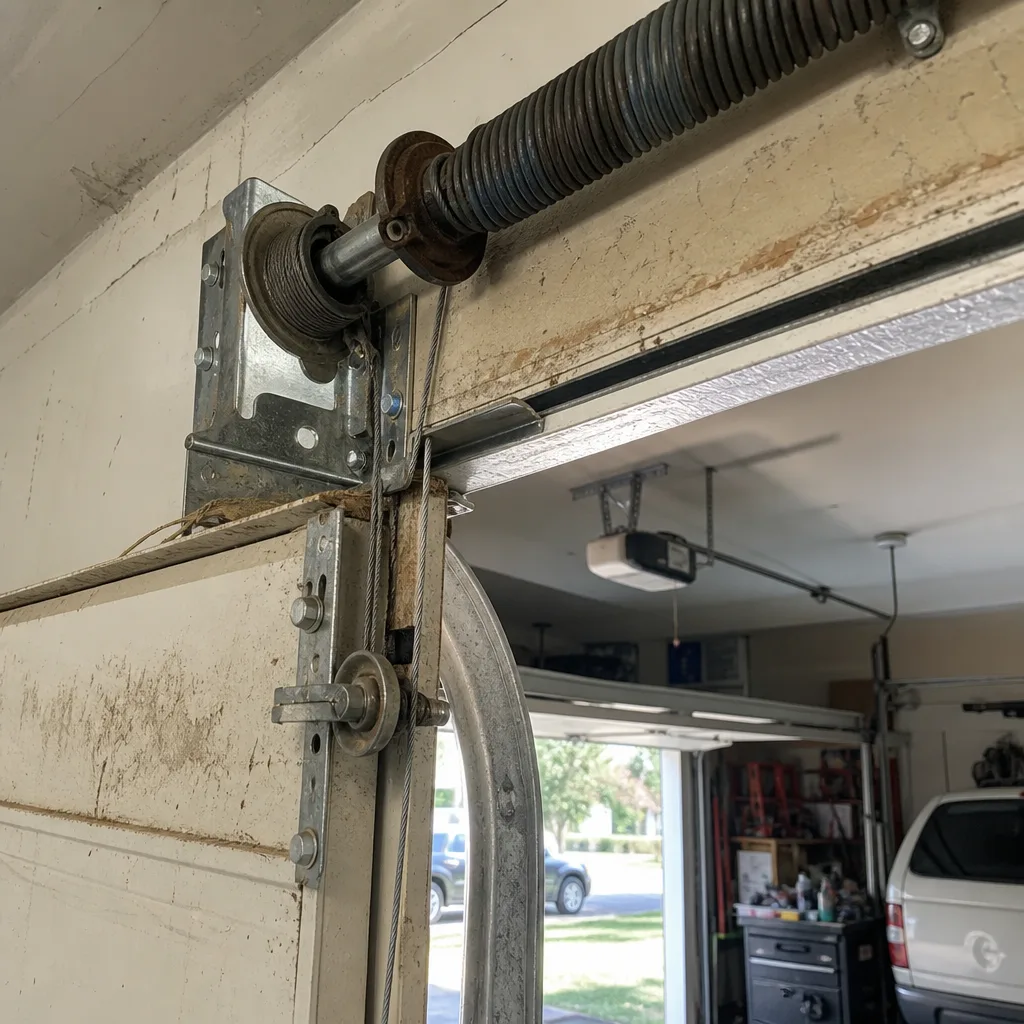 Before
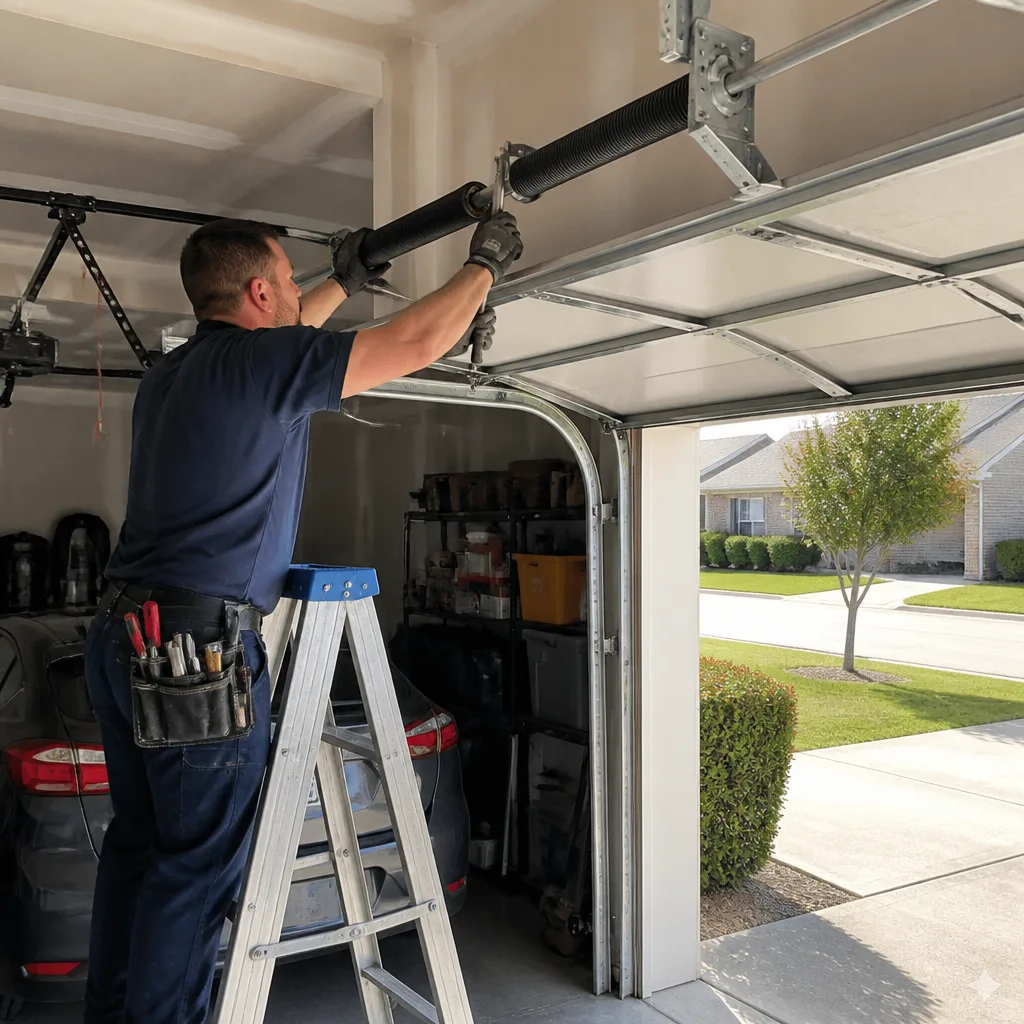 After
AfterThe Complete Guide to Garage Door in Alvin
Alvin averages over 50 inches of rainfall a year and sits on some of the most expansive clay soil in Brazoria County. Two facts that quietly destroy garage door hardware while homeowners assume the door is simply “getting old.” In our 42 years serving Southeast Texas, we have learned that garage doors in Alvin fail differently than they do 50 miles inland. The salt air, the ground movement, the thermal cycling - these forces do not appear in manufacturer spec sheets, but they determine whether your door lasts 8 years or 18. This guide explains what Alvin’s environment actually does to your garage door, how to spot trouble before it strands you, and when repair makes sense versus when the system has been compromised beyond recovery. For DIY vs Professional Garage Door: The Alvin Homeowner’s Decision Guide, see our dedicated breakdown.
Quick Answer
Garage doors in Alvin face accelerated wear from Gulf Coast humidity, expansive clay soil, and salt-laden air that corrodes hardware faster than inland climates. A well-maintained steel door with galvanized or stainless components, properly matched to your home’s insulation needs, typically lasts 15-20 years in Alvin conditions. The key is selecting hardware rated for coastal exposure and scheduling maintenance that addresses the specific stresses this region imposes.
Table of Contents
- How Alvin’s Climate and Soil Attack Garage Doors
- Selecting Hardware That Survives Coastal Conditions
- Insulation R-Value for Alvin’s Climate Zone
- Real Lifespans in Southeast Texas Conditions
- Repair vs. Replace: An Alvin Decision Map
- A Maintenance Schedule That Actually Works Here
- Garage Door Openers for Heat and Humidity
- Common Mistakes to Avoid
- When to Call a Professional
- Frequently Asked Questions
How Alvin’s Climate and Soil Attack Garage Doors
Most garage door advice assumes a stable foundation and moderate humidity. Alvin offers neither.
The clay soil here is expansive - it swells when wet and shrinks when dry. A single summer thunderstorm followed by a week of August heat can shift a garage slab 1/4 inch. That movement transfers directly to your door’s vertical tracks. We see this constantly in neighborhoods like Mustang Crossing and Southpoint, where homes built during the 1990s and 2000s are now showing track misalignment that has nothing to do with the door itself.
When the slab tilts, the track gap narrows on one side and widens on the other. The rollers bind. The opener strains. The safety sensors, which require precise alignment, throw false obstructions. Homeowners replace the opener when the real problem is foundation movement.
The header bracket - the piece that anchors the opener to the wall above the door - takes the worst of it. In Alvin’s older homes, especially those with original construction near Chocolate Bayou, we find header brackets pulling out of studs that have compressed or shifted. A loose header bracket does not just make noise. It changes the geometry of the entire opening system and accelerates wear on the trolley, the rail, and the motor.
Then there is the humidity. Alvin’s annual relative humidity averages above 75%, and summer months regularly push 90%. That moisture condenses on uninsulated steel panels, especially on north-facing garage doors that never fully dry. The result is not dramatic rust that announces itself. It is micro-pitting that weakens panels from the inside out, and corrosion at the bottom section where splash-back from hard rains collects.
The salt air is the final factor. Alvin sits 25 miles from the Gulf as the crow flies. That proximity matters. We can tell a door’s age and location by the hardware corrosion pattern. Inland Pearland doors show surface oxidation. Alvin doors show pitting at hinge points, cable fraying from the inside, and spring coils that fail from inter-coil corrosion rather than simple cycle fatigue.
What this means practically: A garage door system in Alvin needs more frequent inspection, hardware rated for coastal exposure, and a maintenance approach that accounts for ground movement rather than ignoring it.
Selecting Hardware That Survives Coastal Conditions
Manufacturer spec sheets list “galvanized” as a feature. In Alvin, it is a requirement. The difference between standard zinc plating and hot-dip galvanizing determines whether your hardware lasts 5 years or 15.
Standard plating applies a thin zinc layer electrostatically. It looks fine on the showroom floor. In salt-air environments, that thin layer fails at edges and weld points first. Hot-dip galvanizing immerses the steel in molten zinc, creating a thicker, more uniform coating that protects even after surface scratches. For Alvin, we specify hot-dip or stainless hardware on every job.
Here is what to verify on your door or your quote:
- Hinges: Look for #11 gauge or heavier, hot-dip galvanized or 304 stainless. Lightweight hinges corrode at the barrel first, then spread lateral load unevenly across panels.
- Rollers: Nylon rollers with sealed stainless steel bearings outperform standard steel rollers in humid environments. The seal keeps moisture and grit out of the bearing race. In Alvin’s dusty dry spells followed by sudden downpours, that seal matters.
- Cables: Galvanized aircraft cable is standard. Stainless aircraft cable adds cost but eliminates the internal fraying we see when galvanized cables corrode from the inside out. For doors facing prevailing southeast winds, we recommend stainless.
- Track: 14-gauge galvanized steel is minimum. Heavier 12-gauge resists the racking forces from slab movement better. The critical detail: track brackets that are bolted, not riveted, so adjustment is possible after foundation shift.
- Spring system: Torsion springs should be oil-tempered or coated, not bare steel. The coating choice - epoxy, powder, or zinc - affects lifespan more in humid climates than dry ones.
One specification most homeowners miss: the fasteners themselves. Standard zinc-plated lag screws into wood framing corrode and weaken in Alvin’s humidity. We use stainless or hot-dip galvanized fasteners exclusively, and we inspect existing fasteners on every service call. A hinge can be perfect while the screw holding it has lost 40% of its cross-section to corrosion.
When we install garage door installation in Alvin, we specify coastal-grade hardware even when the customer does not ask. It is not an upsell. It is the only way we know to deliver a door that will not need premature service.
Insulation R-Value for Alvin’s Climate Zone
Alvin sits in IECC Climate Zone 2, which means hot summers, mild winters, and almost no risk of freezing pipes in a garage. This matters for insulation selection because many homeowners over-buy, paying for R-value they do not need while missing the property that actually helps here. Our Garage Door Cost Breakdown: The Alvin Homeowner’s Reference for 2026 shows where to invest and where to save.
Manufacturer marketing pushes R-12 to R-18 as “premium.” For Alvin, that is unnecessary. An attached garage in this climate needs R-6 to R-8 to moderate temperature swing and reduce condensation. A detached garage, or one used as workshop space, benefits from R-8 to R-10. Beyond that, the payback period extends past the door’s useful life.
The more important specification for Alvin is the facing material. Polyurethane or polystyrene insulation with a vinyl or steel backer resists humidity better than raw insulation exposed to garage air. We see mold and moisture damage in unbacked insulation within 3-4 years in this climate. The backer creates a vapor barrier that the insulation itself cannot provide.
Insulation type comparison for Alvin conditions:
| Type | R-Value (typical) | Best Use in Alvin | Humidity Consideration |
|---|---|---|---|
| Single-layer steel (no insulation) | R-0 | Detached, unconditioned storage only | Prone to condensation; panel sweating common |
| Double-layer steel with polystyrene | R-4 to R-7 | Attached garage, basic temperature moderation | Acceptable with sealed backer; inspect annually |
| Triple-layer steel with polyurethane | R-10 to R-18 | Conditioned workspace, extreme temperature stability | Excellent; closed-cell polyurethane resists moisture |
| Wood composite | R-6 to R-8 | Aesthetic match for traditional homes | Requires sealed finish; humidity swells unsealed edges |
The real mistake we correct in Alvin is installing a high-R door with poor sealing. The gaps around the perimeter, between sections, and at the bottom threshold leak conditioned air faster than conduction through the panel. A well-sealed R-6 door outperforms a leaky R-12 door. We address sealing on every garage door repair in Alvin, not just installation.
Real Lifespans in Southeast Texas Conditions
Manufacturer warranties and national averages mislead Alvin homeowners. Here is what we observe in the field, based on thousands of service records across Brazoria County.
Torsion springs: Rated for 10,000 cycles (roughly 7 years at 4 cycles per day). In Alvin’s humidity, we see corrosion-induced failure at 6,000-8,000 cycles unless the spring has protective coating and annual lubrication. Salt-air exposure accelerates this by 15-20%. A spring facing southeast, catching morning marine air, fails earlier than one on the north side.
Extension springs: Shorter lifespan generally, 4-6 years in Alvin conditions. The safety cable that contains a broken spring corrodes faster than the spring itself in some cases, which creates a genuine hazard.
Rollers: Nylon rollers with sealed bearings last 10-12 years. Standard steel rollers show flat spots and corrosion in 5-7 years. The difference is almost entirely the seal keeping out humidity and the Gulf Coast’s fine, wind-driven grit.
Cables: 8-12 years for galvanized, 12-15 for stainless. The critical failure mode in Alvin is internal corrosion that does not show until fraying appears. We replace cables proactively at inspection, not after visible wear.
Openers: Chain-drive units last 10-15 years with maintenance. Belt-drive units, quieter but with elastomer belts that degrade in heat and UV, show 8-12 years in Alvin’s garage temperatures that regularly exceed 110°F in summer. Screw-drive units, once common, have largely disappeared because the lubrication requirements conflict with dust and humidity.
Panels and sections: Steel doors with proper finish last 20-25 years. The failure point is almost always bottom section corrosion from splash and ground moisture, not panel failure. Wood doors, beautiful but demanding, need refinishing every 3-4 years in this sun and humidity. Without it, 10-12 years is optimistic.
These numbers assume no major foundation movement. A significant slab shift can distort a 5-year-old door beyond economical repair. We have replaced 3-year-old doors in Alvin’s newer subdivisions where clay soil movement was severe enough to rack the frame.
Repair vs. Replace: An Alvin Decision Map
This is the question we hear most often, and the answer depends on whether Alvin’s environment has compromised the system structurally or merely worn a replaceable component.
Repair extends useful life when:
- The door is less than 12 years old and panels are structurally sound.
- Foundation movement is minor and correctable with track realignment.
- Failure is isolated to one component - a broken spring, worn opener gear, failed safety sensor.
- Hardware corrosion is surface-level, not pitting that has weakened hinges or brackets.
- The door was originally well-specified for coastal conditions, even if maintenance lapsed.
Replace is the better investment when:
- The door is over 15 years old and uses hardware not rated for coastal exposure - standard plating, unsealed bearings, bare steel springs.
- Multiple components show advanced corrosion. Replacing springs while hinges and cables are compromised is false economy.
- Foundation movement has racked the frame, creating gaps that no track adjustment can close. We see this in Alvin homes where slab shift exceeds 1/2 inch differential.
- The door is uninsulated or poorly insulated, and energy costs or condensation damage are concerns.
- Panel damage from impact or corrosion has compromised structural integrity. A dented top section is cosmetic. A rusted-through bottom section is terminal.
The critical distinction: repair addresses a symptom. Replacement addresses a system that Alvin’s environment has defeated. We give straight assessments on this. Our Mainspring Garage Door Co. home page explains our 90-Day Done Right Promise - if we recommend repair and the door needs replacement within that window, we apply the repair cost toward replacement. No argument, in writing.
In Mustang Crossing and along Gordon Street, we have seen homeowners invest $400 in spring replacement on a door that needed $1,200 in total hardware within two years. The math favors replacement when corrosion is systemic. We say so, even when it costs us the smaller job.
A Maintenance Schedule That Actually Works Here
National maintenance schedules assume moderate climates. Alvin needs a more aggressive approach. Here is what we recommend based on observed failure patterns.
Every 3 months (March, June, September, December):
- Visual inspection of springs for coating damage, rust spots, or coil separation.
- Check bottom seal and threshold for cracking or compression. Alvin’s UV and ozone degrade rubber faster than northern climates.
- Operate door manually to feel for binding, grinding, or uneven resistance. Any change from smooth operation indicates track or roller trouble.
- Inspect opener rail for droop or loosening at header bracket - the first sign of foundation movement affecting the system.
Every 6 months (April and October, ideally before extreme weather):
- Lubricate torsion springs with silicone-based spray. Avoid WD-40 - it attracts dust and evaporates. The lubrication film should be light, not dripping.
- Tighten all hardware: hinges, track brackets, opener mounting. The expansion and contraction from Alvin’s temperature swings loosen fasteners faster than stable climates.
- Test safety reverse and photo-eye alignment. Humidity fogs sensors; ground movement knocks them out of alignment.
- Clear track of debris. Post-hurricane or severe storm, check for wind-blown grit that accelerates roller wear.
Annually:
- Professional inspection including cable condition, spring cycle count estimation, and panel structural check.
- Assessment of bottom section and seal for moisture damage.
- Opener force and limit settings - critical after any spring replacement, and worth verifying annually as springs age and lose tension.
Our $89 Seasonal Tune-Up covers the annual inspection and adjustment. For most Alvin homeowners, that plus quarterly self-checks prevents the emergency calls that come at 6 PM on a Friday when the spring finally lets go.
Garage Door Openers for Heat and Humidity
The opener sits in the hottest, most humid part of your home. Alvin garage temperatures reach 120°F in August. That heat degrades electronics, capacitors, and motor insulation faster than any manufacturer warranty acknowledges.
Chain drive: Reliable, repairable, tolerant of heat. The chain needs annual lubrication, which is straightforward. Noise is the drawback - significant in attached garages with bedrooms above. We install LiftMaster and Chamberlain chain-drive units for detached garages and customers who prioritize longevity over quiet.
Belt drive: Quieter, but the rubber-composite belt degrades in heat and ozone. In Alvin, we see belt replacement at 6-8 years versus 10-12 in cooler climates. The trade-off is acceptable for attached garages where noise matters. We specify reinforced belts and keep replacement belts on the truck.
Wall-mount (jackshaft): Mounts beside the door, freeing ceiling space. Excellent for high-lift or cathedral ceiling applications. The motor runs cooler because it is not trapped in garage air. We install these increasingly in Alvin’s newer homes with higher ceilings. The downside: higher cost and requirement for a torsion spring system in good condition.
Smart features: WiFi connectivity, battery backup, camera integration. The battery backup is worth considering for Alvin’s hurricane exposure - power outages are common in tropical weather. The battery itself needs replacement every 2-3 years in heat, so factor that into cost. We are factory-familiar with garage door opener in Alvin configurations across all major brands and can match features to actual use patterns, not marketing checklists.
One Alvin-specific recommendation: avoid openers with exposed circuit boards in unventilated housings. The condensation that forms during our rapid weather changes - 85°F and humid to 65°F after a front - corrodes electronics. Quality units from established manufacturers seal the board compartment. We see premature failure in discount brands that omit this.
Common Mistakes to Avoid
- Ignoring the bottom seal until water enters. Alvin’s hard rains splash under doors with worn seals, and that water carries corrosive salts and minerals. Replace the seal at first cracking, not after the threshold rots.
- Using standard hardware on a “coastal” door. Some retailers sell doors labeled “coastal” with standard zinc-plated hinges and cables. Verify every component’s specification. The label means nothing if the hardware is wrong.
- Repairing a door on a moving slab without addressing the foundation. We realign tracks, but we tell customers when slab movement is active and progressive. Adjusting tracks every 18 months is expensive maintenance; addressing drainage or foundation stabilization is the actual fix.
- Choosing insulation based on R-value alone. In Alvin, moisture resistance and proper sealing matter more than incremental R-value. A well-sealed R-6 door outperforms a leaky R-12 installation.
- DIY spring replacement. Torsion springs store lethal energy. We do not provide step-by-step instructions because the risk is not theoretical - we have seen serious injuries from springs released improperly. This is trained technician work, period.
- Waiting for total failure. The grinding roller, the slow-opening door, the intermittent sensor fault - these are warnings. Addressing them early prevents the emergency that strands your car or damages the opener.
- Assuming all brands service equally in Alvin. Parts availability, technician training, and warranty support vary. We maintain stock and training for Craftsman, Raynor, LiftMaster, and Chamberlain because these brands have proven support networks in our region.
When to Call a Professional
Call when the door does not move smoothly, makes new noises, reverses unexpectedly, or shows visible hardware damage. Call before the emergency, not after. Specifically: broken springs, frayed cables, bent tracks, opener motor strain, or any door that has been struck by a vehicle. These conditions worsen with operation and can damage additional components.
For torsion spring systems, call immediately if you see a gap in the spring coil or hear a loud bang from the garage. Do not attempt to open the door manually with a broken spring - the weight is unbalanced and the door can fall or damage the opener.
Mainspring Garage Door Co. offers free estimates in Alvin. We answer the phone with a live person, 24/7, including nights, weekends, and holidays. Most repairs are completed in a single visit because our trucks carry springs, cables, rollers, and openers from all major brands. The price is stated before any work begins. Call (936) 246-3925.
Frequently Asked Questions
Most common repairs in Alvin range from $150 for sensor realignment or roller replacement to $350 for spring replacement with hardware inspection. Opener repairs typically fall between $180 and $400 depending on component failure. We provide exact, written quotes before starting any work, and our $50 Off Any Repair Over $250 applies automatically. Call (936) 246-3925 for a free estimate.
Standard torsion springs last 6,000-8,000 cycles in Alvin’s coastal humidity, versus the 10,000-cycle rating in dry climates. That translates to roughly 5-7 years for typical use. Coated or oil-tempered springs, properly maintained, extend this to 8-10 years. The southeast-facing doors in Alvin’s open subdivisions show the shortest lifespan due to direct salt-air exposure.
No. Torsion springs store enough torque to cause serious injury or death if released improperly. The winding cones, cable drums, and set screws require specialized tools and training. We do not recommend any homeowner attempt this repair. Our technicians are trained journeymen who handle spring replacement with proper tools and safety protocols.
R-6 to R-8 is sufficient for most attached garages in Alvin’s Climate Zone 2. Detached workshops or conditioned spaces benefit from R-8 to R-10. Higher R-values provide diminishing return in this region where freezing is rare. Proper sealing around the perimeter matters more than incremental insulation for energy efficiency and condensation control.
In Alvin, the most common cause is foundation movement from expansive clay soil. Slab shift tilts the vertical tracks, creating binding and roller jump. Less commonly, impact damage, worn rollers, or loose track brackets cause similar symptoms. A professional inspection determines whether track realignment, hardware upgrade, or foundation attention is the proper solution.
Yes. Our trucks are stocked with springs, cables, rollers, hinges, and openers from major brands including LiftMaster, Chamberlain, and Craftsman. Most repairs are completed in a single visit. Calls are answered by a live person 24/7, and we prioritize doors that are stuck open or inoperable for security reasons.
No. The flat price is stated in writing before any work begins. If we discover additional issues during repair, we stop and discuss options with you. There are no surprises on the bill. This is part of our 90-Day Done Right Promise - we stand behind every quote and every repair.
Yes. We stock components for Raynor, LiftMaster, Chamberlain, Craftsman, Genie, Clopay, Amarr, and Wayne Dalton systems. Our technicians are factory-familiar with each brand’s specifications and common failure modes. This inventory is why most Alvin repairs finish in one visit without waiting for parts.
The Bottom Line
Garage doors in Alvin fail for reasons that generic advice ignores: clay soil movement, salt-air corrosion, and thermal cycling that degrades components faster than inland climates. The right door, specified with coastal-grade hardware and matched to actual insulation needs, lasts 15-20 years here. The wrong door, or the right door neglected, becomes a recurring expense and a security risk.
We have served this region since 1984. We have seen what works and what fails in Alvin’s specific conditions. Our approach is straightforward: inspect honestly, quote flat prices before work begins, use hardware that survives this environment, and stand behind the result for 90 days in writing. No phone trees, no upsell pressure, no surprises on the bill.
For a free estimate on repair, replacement, or a new installation that accounts for Alvin’s real conditions, call (936) 246-3925. A live person answers, any time.
Written by Carl Dutton, Owner at Mainspring Garage Door Co., serving Alvin since 2016.